
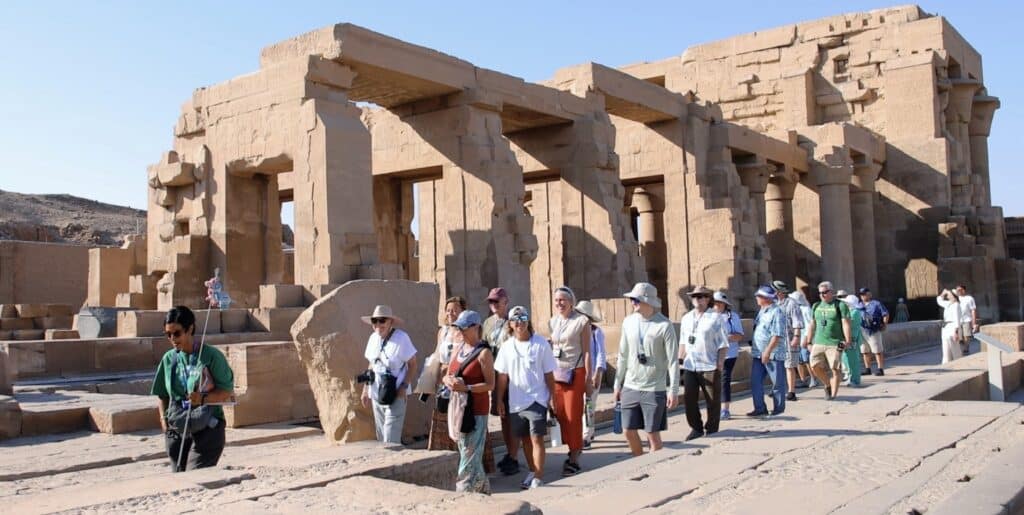
On this special itinerary hosted by All Star Liveaboards, we experienced the highlights of Ancient Egypt and the Red Sea in just 9 unforgettable days! Everyone on the trip enjoyed exploring world-famous historic sites along the Nile River during All Star Fayrouza’s maiden voyage, incredible diving in the Northern Red Sea aboard All Star Ghani, and the must-see sights and stops throughout Cairo.
When traveling from the USA to Egypt, it can feel overwhelming to fit in all the region’s essential attractions while also making time to dive the Red Sea during a limited vacation. What many travelers don’t realize is just how large Egypt truly is. For this reason, having a well-planned itinerary is key, allowing you to spend several days in each major area and fully experience the history, culture, and secrets of this fascinating ancient civilization. Thankfully, All Star Liveaboards has you covered every step of the way.
The typical tourist may only visit the Great Pyramids of Giza, without ever experiencing Egypt’s true key to life: the Nile River. The Nile is the world’s longest river, stretching about 4,130 miles from Lake Victoria in Africa to the Mediterranean Sea. This river allowed ancient Egyptian civilization to survive and thrive in the desert because its predictable annual floods provided fertile soil, fresh water, and an important transportation route.
In a way, this trip felt like a journey back in time to 3100 BCE, offering a glimpse into what many consider one of the earliest advanced civilizations on Earth. Ancient Egypt is famous for its remarkable monumental architecture, seen in its temples and pyramids, as well as its hieroglyphic writing, advanced engineering, and unified political system led by royal pharaohs.
Arrival
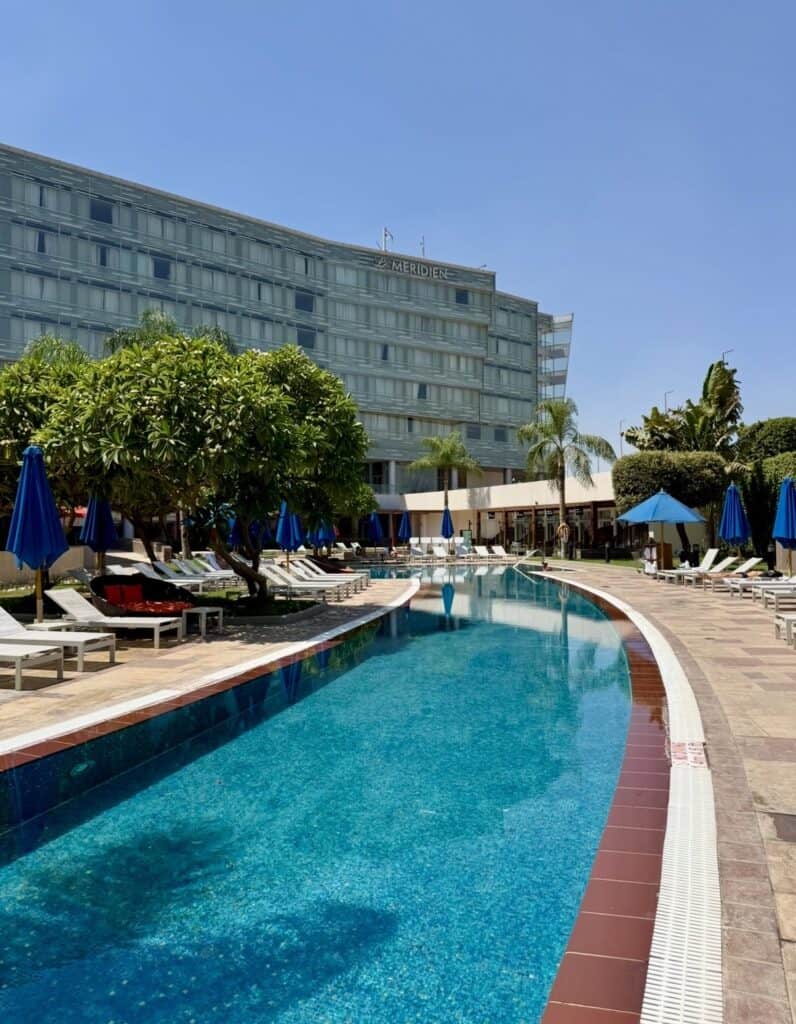
We arrived in Cairo around 3:00 am a day early and booked a room at the Le Méridien Hotel at the Cairo airport to help us adjust to the time difference. This conveniently located hotel offers comfortable accommodations, a huge buffet serving three meals a day, and a beautiful outdoor courtyard and pool.
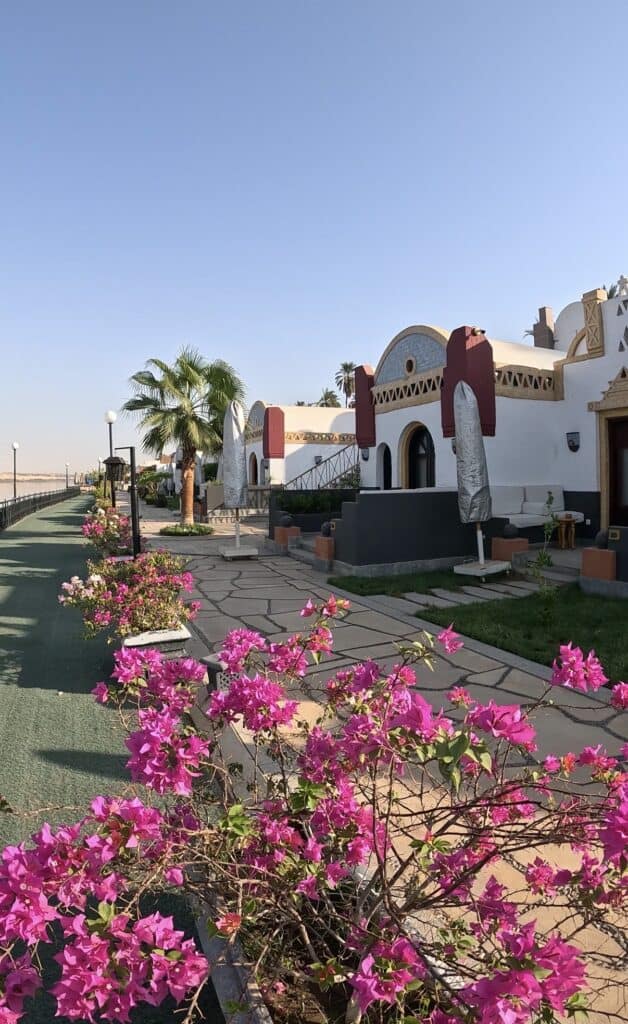
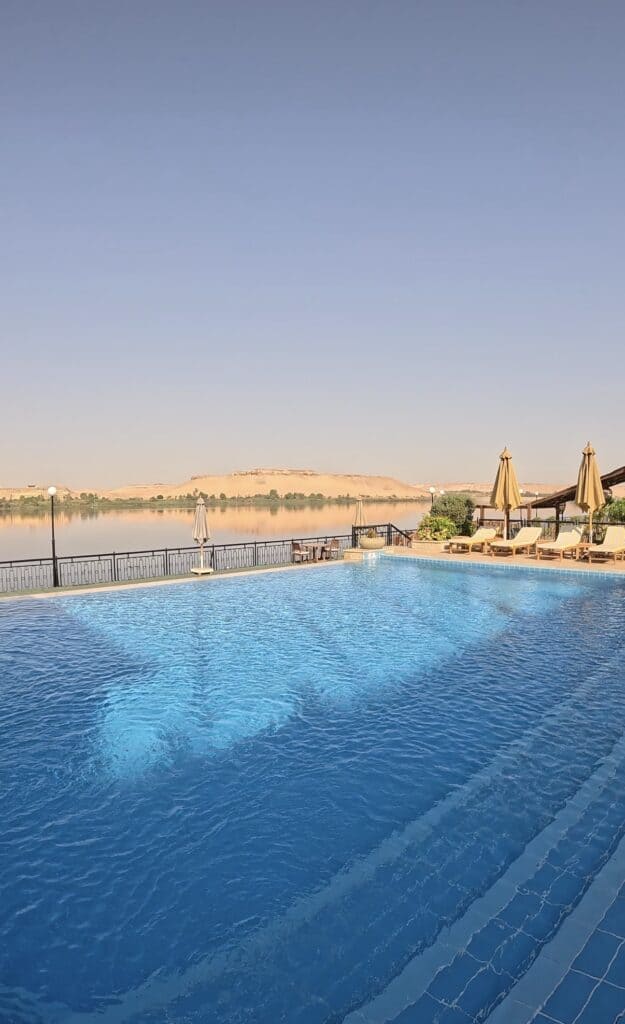
Later that evening, we took a domestic EgyptAir flight from Cairo to Aswan around 7:00 pm. After arriving in Aswan the night before boarding Fayrouza, we checked into the Sonesta El Nouba Hotel for a restful night. The hotel features elegant suites with beautiful architecture overlooking the Nile. Guests can also enjoy a sparkling pool and a riverfront restaurant onsite. That evening, we were especially entertained watching countless large catfish swimming in the river right from our dinner table.
Touring Structure
The next morning, we met Amira in the hotel lobby, who would be our Egyptian tour guide for the week. Our group was then escorted to the shuttle bus, which took us to our first tour sites: the Aswan Dam and Philae Temple. The spacious shuttle bus we used throughout the trip featured comfortable, reclining seats and was fully air conditioned. Our friendly bus driver remained with the vehicle while our group was out exploring, giving everyone peace of mind when choosing to leave personal belongings behind on the bus seats during our tours.
Amira provided each guest with personal earbuds that connected to her microphone, allowing us to explore each site at our own pace while still clearly hearing her explanations of the history right in front of us. On most tours, Amira would first take us to the main highlights of each temple, then give us plenty of free time to explore on our own and take photos. If you are lucky enough to have Amira as your tour guide, you are in great hands. She is extremely knowledgeable about Egyptian history and very professional, while also keeping everything fun and entertaining. Guests truly appreciated how her tours never felt like an information overload and were always very interactive. Amira’s lessons never felt like an intensive history lecture, but rather a conversation where questions were always welcomed and encouraged. Nermine is the operations supervisor. She did a wonderful job coordinating our tour tickets, transportation, restaurant and hotel reservations, and domestic flight, creating a seamless experience for every guest.
All Star Fayrouza
Watch: All Star Fayrouza Official Video
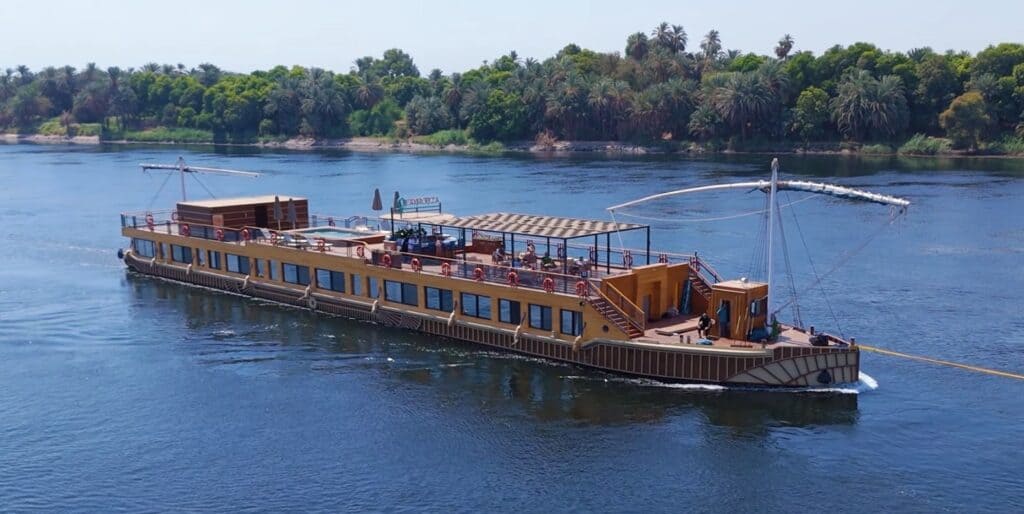
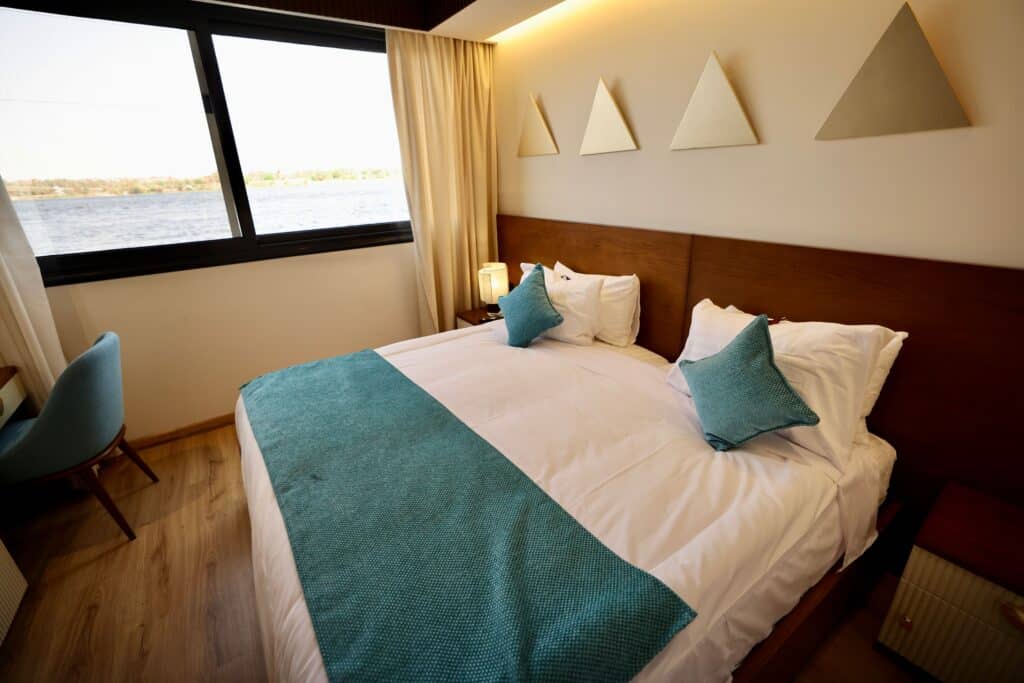
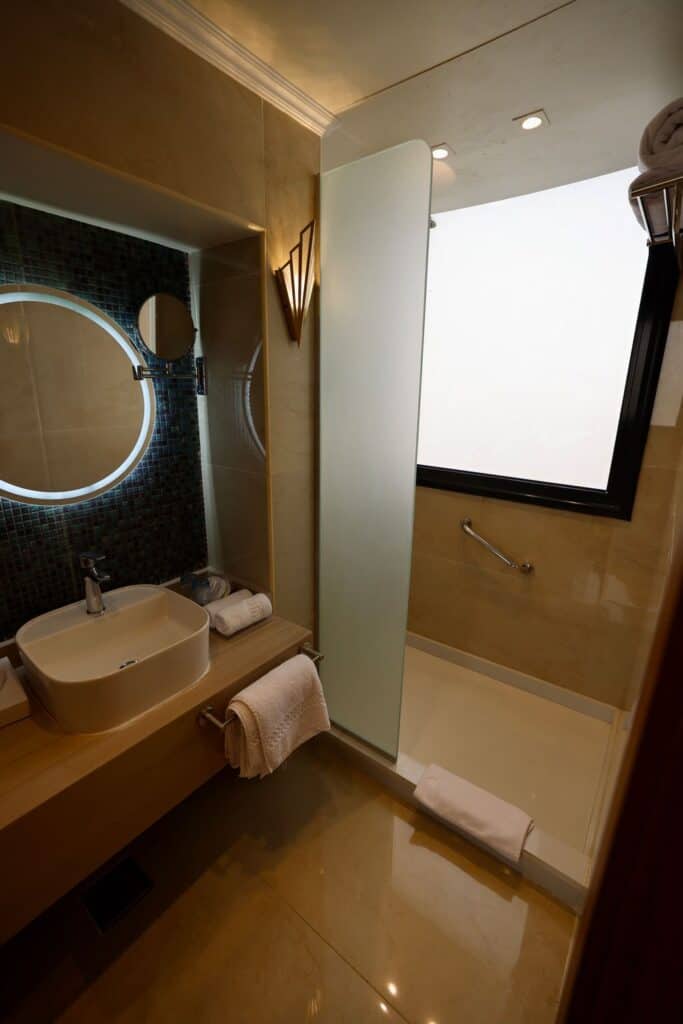
This trip got off to a wonderful start with three nights cruising the Nile River between Aswan and Luxor aboard the luxurious All Star Fayrouza. From the moment we stepped on board, it was clear that exceptional service was a top priority for the crew. We were welcomed with a refreshing drink while the crew took care of our luggage and escorted us to our cabins, followed by a helpful overview of what to expect throughout the journey. The vessel’s accommodations were spacious, comfortable, and thoughtfully equipped with modern amenities. With a maximum capacity of just 23 guests across 12 luxury staterooms, All Star Fayrouza offers an intimate and uncrowded atmosphere. This smaller setting allows the dedicated crew to get to know each guest, providing warm, attentive, and highly personalized service that makes the experience feel exclusive, relaxed, and exceptionally well cared for. Higazi, the cruise director, was especially attentive to each guest’s needs and created an itinerary that flowed effortlessly from one experience to the next.
Passengers aboard All Star Fayrouza will enjoy an all-inclusive, five-star gourmet dining experience three times each day. The daily cuisine offers a delicious variety, including several protein options, fresh salads, vegetables, fruits, rice and beans, and unique desserts. The full-service bar on the upper deck includes an espresso machine, ice maker, and a selection of soft drinks. Guests are welcome to bring their own alcohol onboard. Passengers can purchase their preferred drinks duty-free at a connecting airport along the way or buy alcohol locally in Egypt. Purified water jug dispensers are available on each deck to keep you refreshed and hydrated throughout your journey.
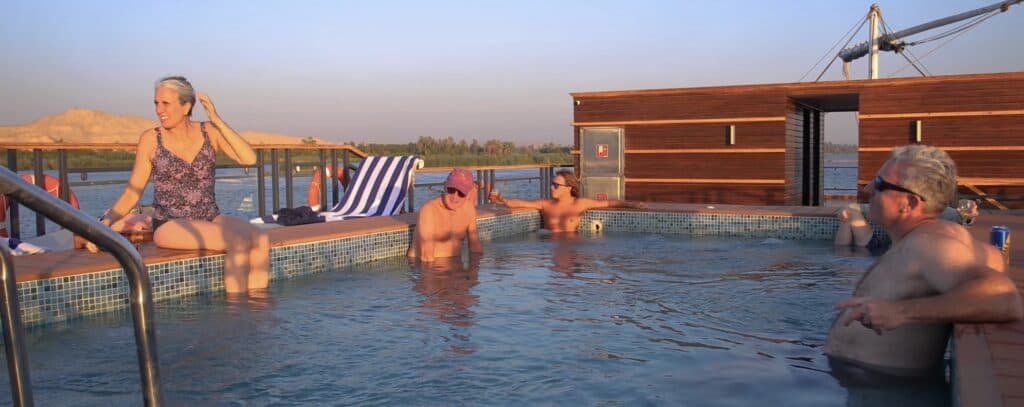
Our group loved relaxing in the refreshing pool after long days of touring monuments, often enjoying drinks and sharing stories as the sun set, creating a beautiful backdrop each evening. The sparkling water was kept at the perfect temperature for comfortably enjoying the warm Egyptian afternoon sun while taking in the stunning scenery along the Nile. For those who prefer relaxing in the shade, the upper deck offers a spacious area covered by ceiling blinds, with plenty of comfortable outdoor sofas. Guests can expect to cruise past countless rural farms with cows and camels, local fishermen wading through shallow areas of the river, dramatic rugged riverbanks, historic mosques, primitive cave dwellings, and an incredible variety of bird species. The striking contrast between the dry, mountainous desert landscape and the lush tropical greenery lining the Nile was truly breathtaking.
Watch: All Star Fayrouza YouTube Short
Tour Highlights
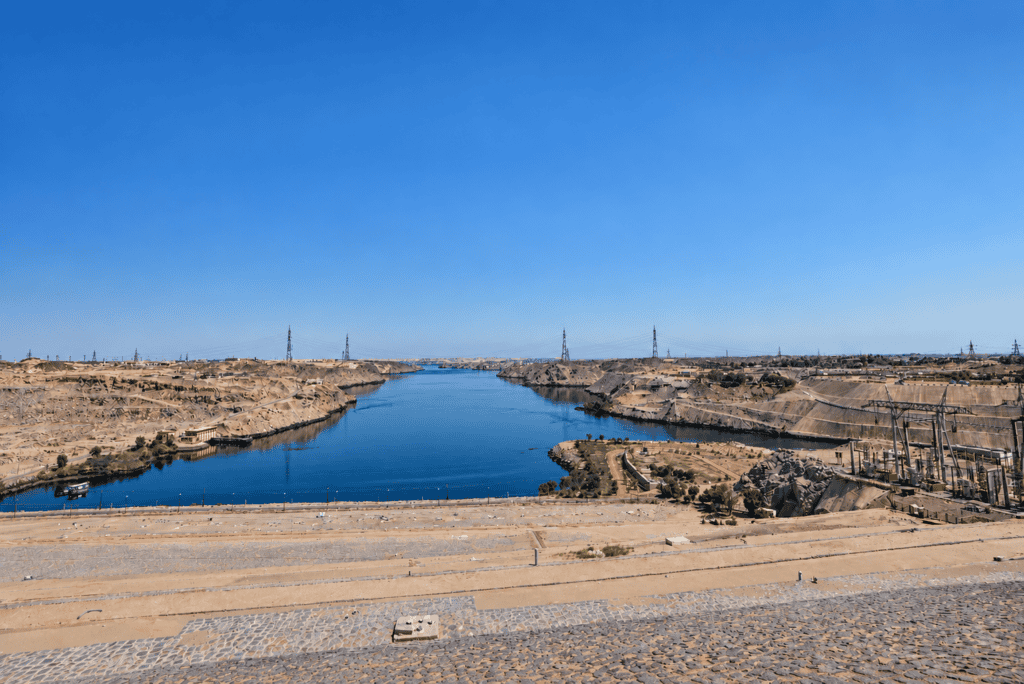
The Aswan High Dam
This dam is very important because it helped control the mighty Nile River, protecting Egypt from the historic cycles of destructive floods and severe droughts. Built between 1960 and 1970 with help from the Soviet Union, it stores water in a huge reservoir called Lake Nasser, allowing farmers to irrigate their fields and grow multiple crops throughout the year. Large signs showcasing Nile River maps and the Dam construction timeline were very informative.
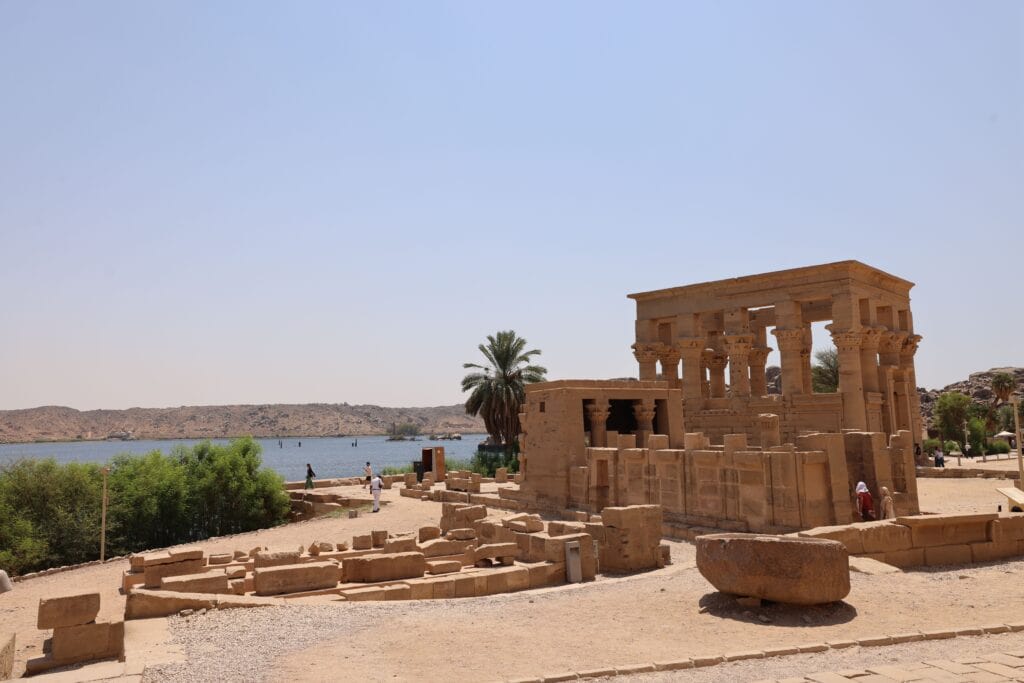
Philae Temple
The Philae Temple complex is an island-based ancient Egyptian sanctuary dedicated mainly to the goddess Isis. To reach this beautiful temple, we boarded a wooden motorboat at a nearby dock. We enjoyed the scenic ride towards the temple on Agilkia Island, passing by fascinating rock formations along the way. Interestingly, during the 1960s and 1970s, the entire complex of 50,000 stones was carefully dismantled and relocated stone-by-stone to higher ground on Agilkia Island, saving it from being flooded by the rushing river.
Watch: Aswan Dam & Philae Temple YouTube Short
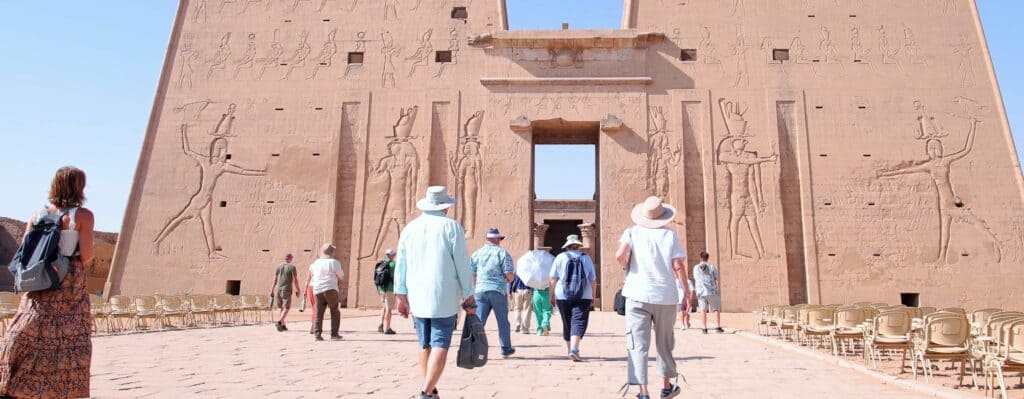
Temple of Kom Ombo
This site is Egypt’s only fully symmetrical double temple, built to honor two gods: Sobek and Horus the Elder. Its mirrored halls and sanctuaries earned it the names “House of the Crocodile” and “Castle of the Falcon.” The temple is also famous for carvings of ancient medical tools (such as scalpels, forceps, and bone saws) and scenes of childbirth, showcasing the sophistication of early Egyptian medicine.
Watch: Temple of Kom Ombo YouTube Short
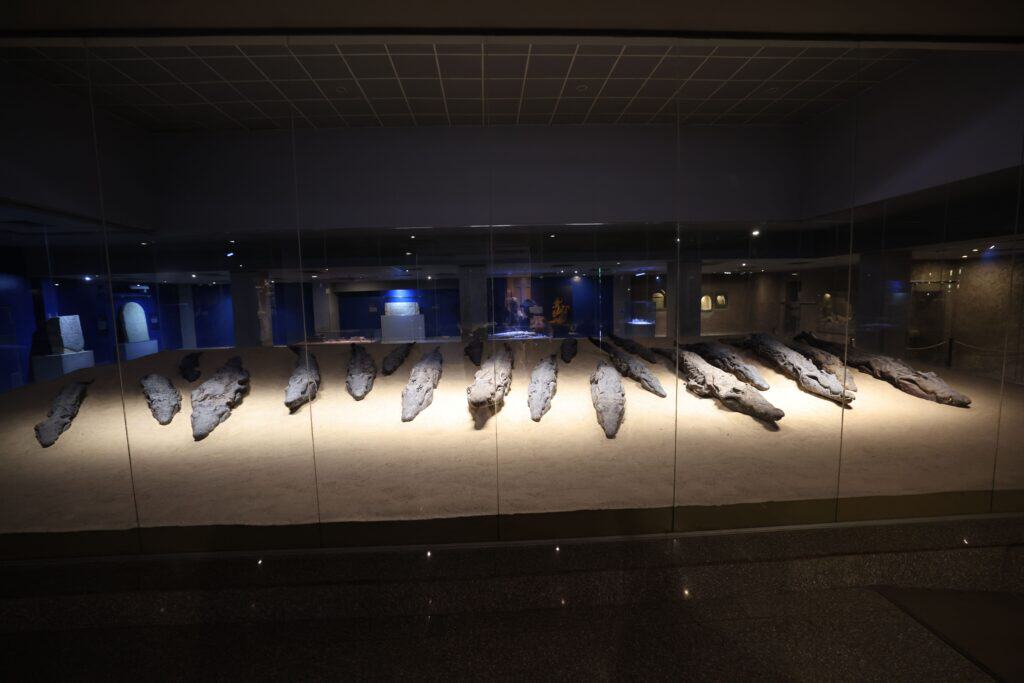
The Crocodile Museum
This museum is located right next to the Temple of Kom Ombo. Ancient Egyptians mummified crocodiles to honor Sobek, the crocodile god. Back then, it was believed that these powerful reptiles were living forms of Sobek. The small museum features fascinating exhibits, including mummified Nile crocodiles ranging from six to fourteen feet long.
Temple of Edfu
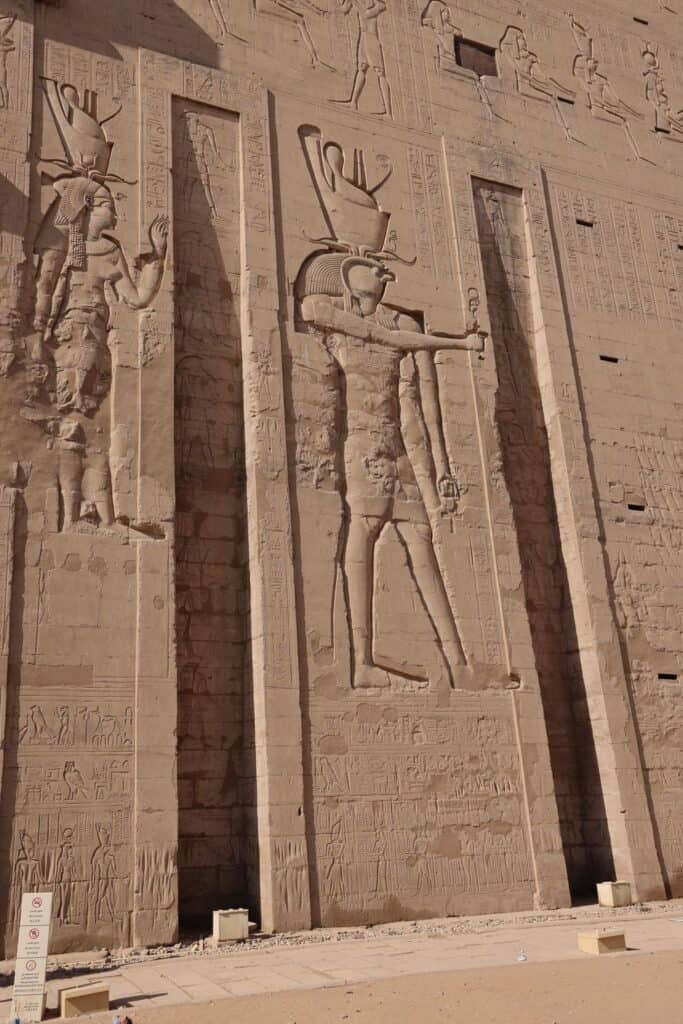
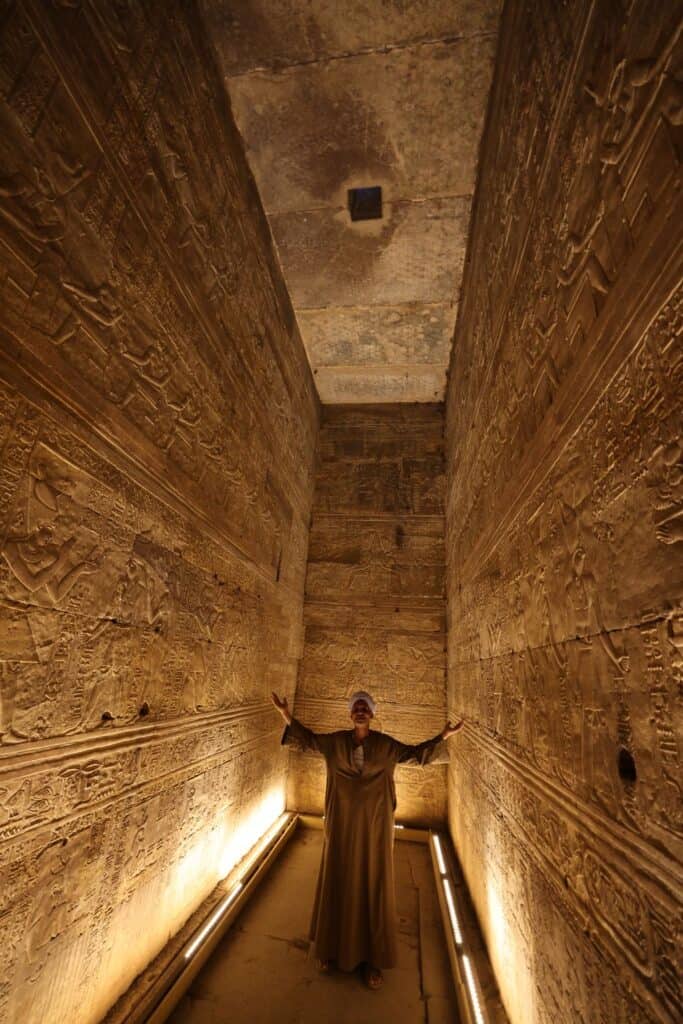
The Temple of Edfu is one of Egypt’s best-preserved ancient temples. Buried under desert sand and Nile silt for centuries, it was uncovered in the 1860s. Dedicated to the falcon-headed god Horus, it features grand pylons, vast courtyards, halls, and an inner sanctuary. Horus symbolizes the sky, divine kingship, healing, and the triumph of order over chaos in ancient Egypt. The walls are covered with detailed carvings of Horus defeating his uncle Set, the god of chaos.
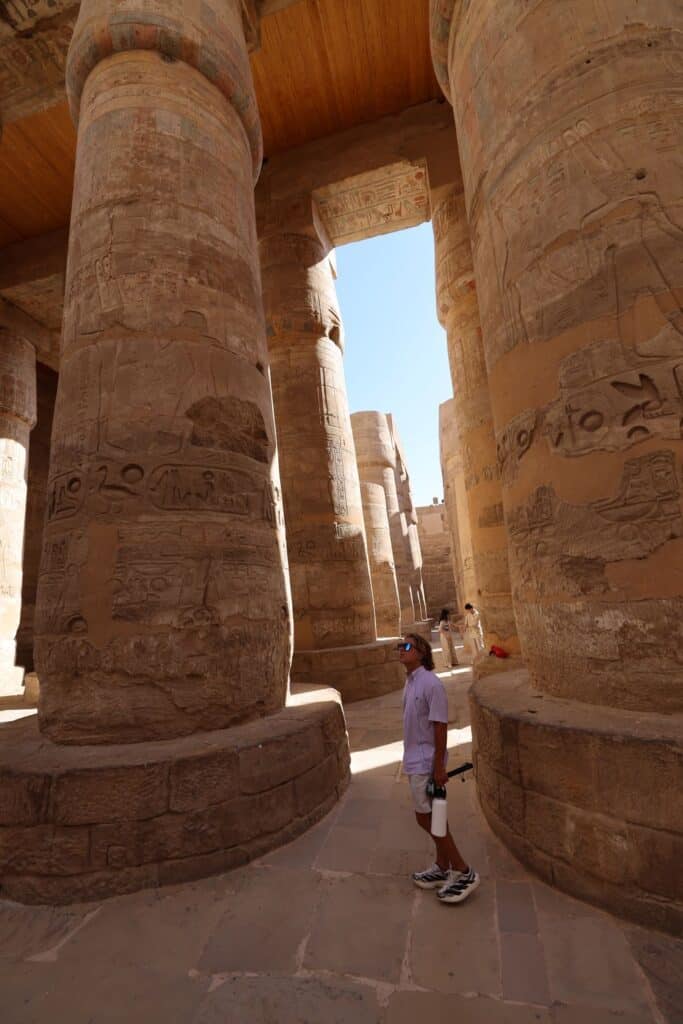
Karnak Temple
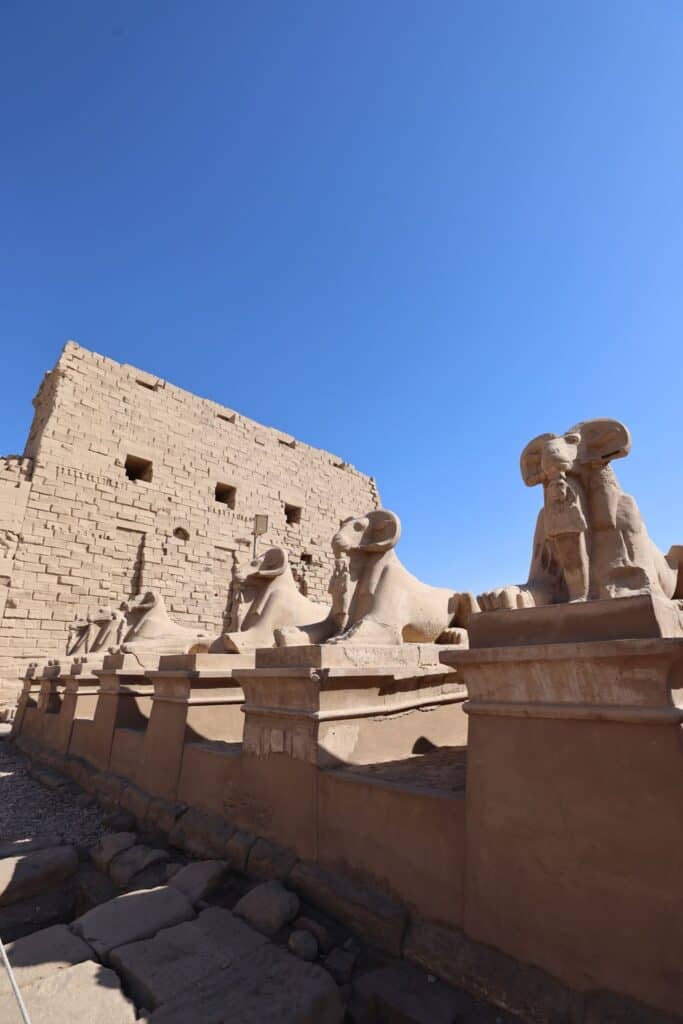
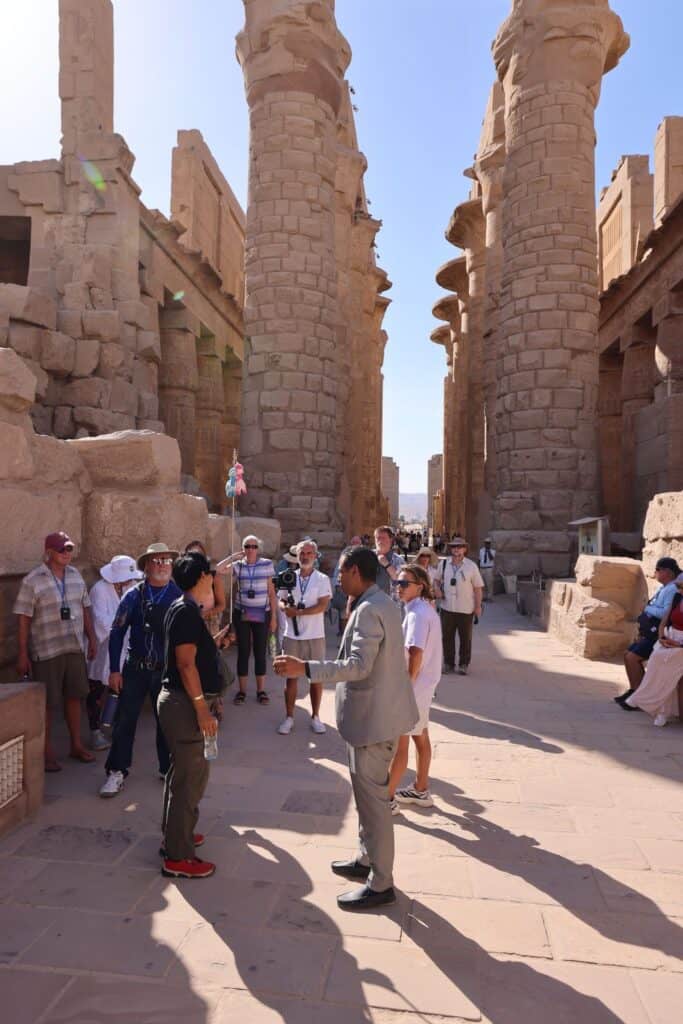
Karak Temple in Luxor, Egypt, is one of the largest religious complexes ever built. Covering more than 200 acres, it was expanded over 2,000 years by more than 30 pharaohs, including Hatshepsut, Ramesses II, and Thutmose III. Highlights include the Great Hypostyle Hall with 134 massive columns, a sacred lake, impressive gateways, shrines, obelisks, chapels, and a sphinx-lined road connecting Karnak to Luxor Temple. The original pigments on the columns and ceiling carvings are remarkably well preserved, with hints of Egyptian blue, bright yellow, ochre red, and deep green.
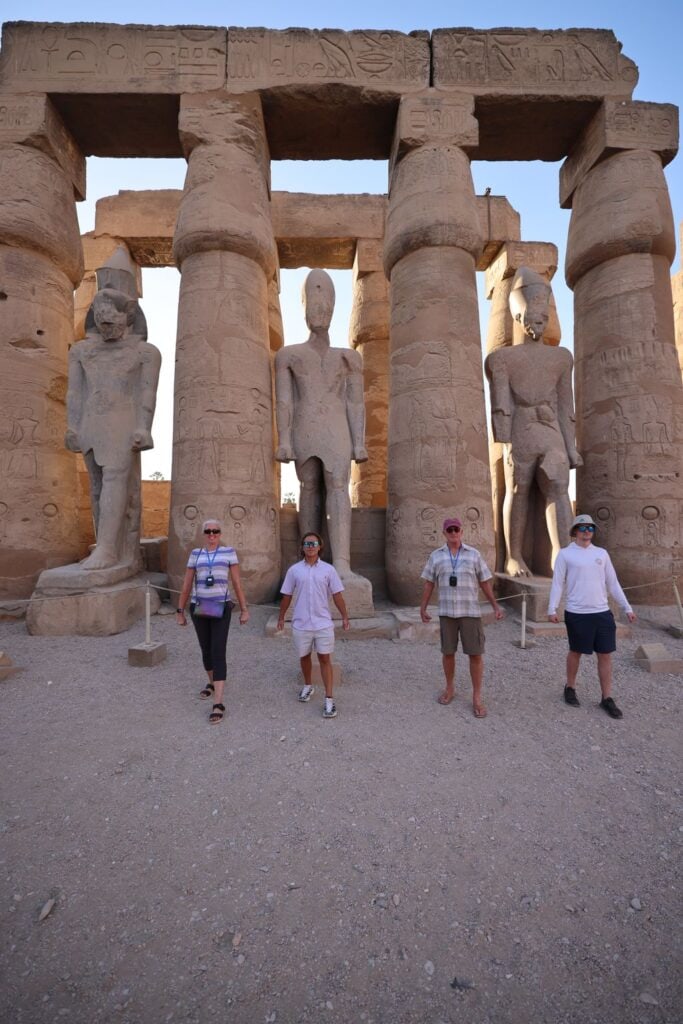
Luxor Temple
Luxor Temple served as the setting to host the annual Opet Festival, where pharaohs were symbolically reborn and their right to rule was renewed. Its entrance features massive statues and obelisks of Ramses II, while a restored avenue of hundreds of statues once connected it to the Karnak complex. Remarkably, the site has remained active for thousands of years, evolving from an ancient Egyptian sanctuary into a Roman fortress, Christian church, and active mosque.
Watch: Temple of Edfu, Luxor Temple & Karnak Temple YouTube Short
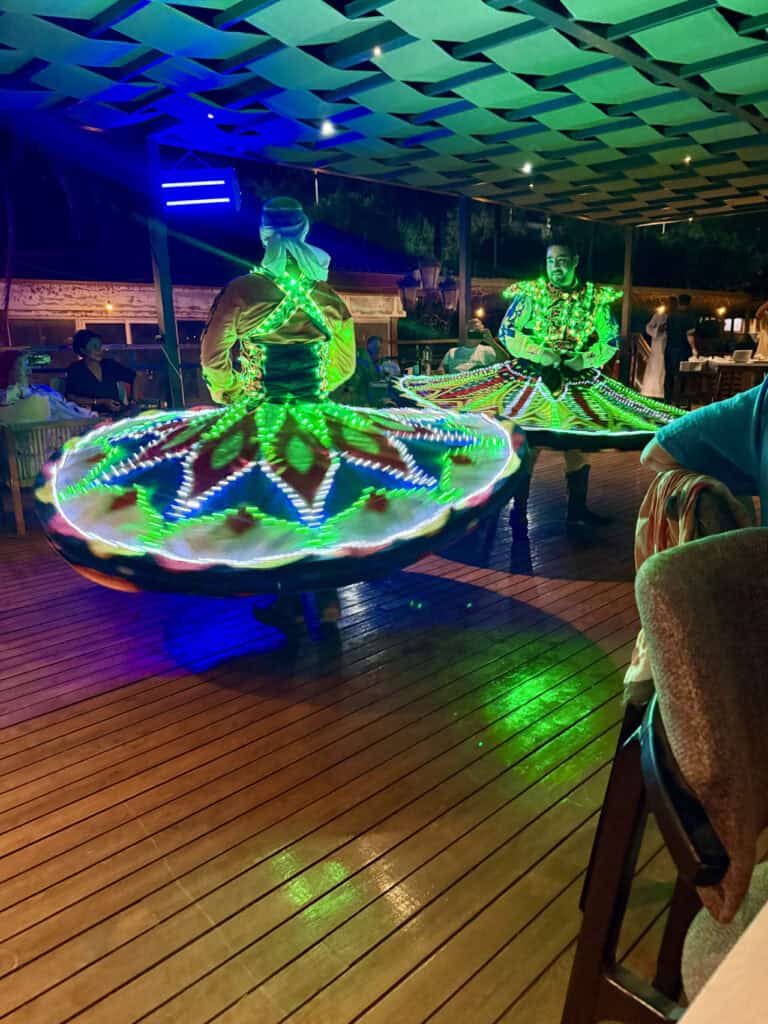
Dinner this evening was held on the upper deck and featured entertainment from an authentic Egyptian band, a female belly dancer, and two male dancers who incorporated their colorful, flashy costumes into the routine. The lively music created a wonderful atmosphere as we enjoyed our final meal onboard. The female belly dancer humorously invited guests to join her for belly dancing lessons, while the male dancers entertained the audience by spinning continuously and incorporating their illuminated costumes and stage props into the performance. The combination of excellent food and lively onboard entertainment made for a truly memorable final evening on Fayrouza.
Valley of the Kings
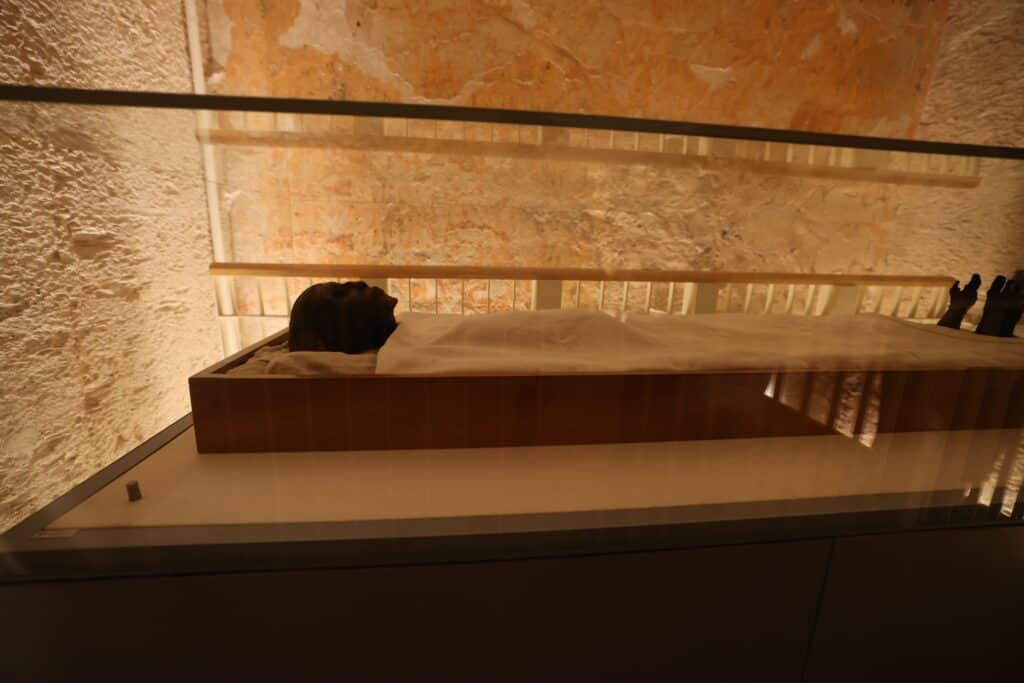
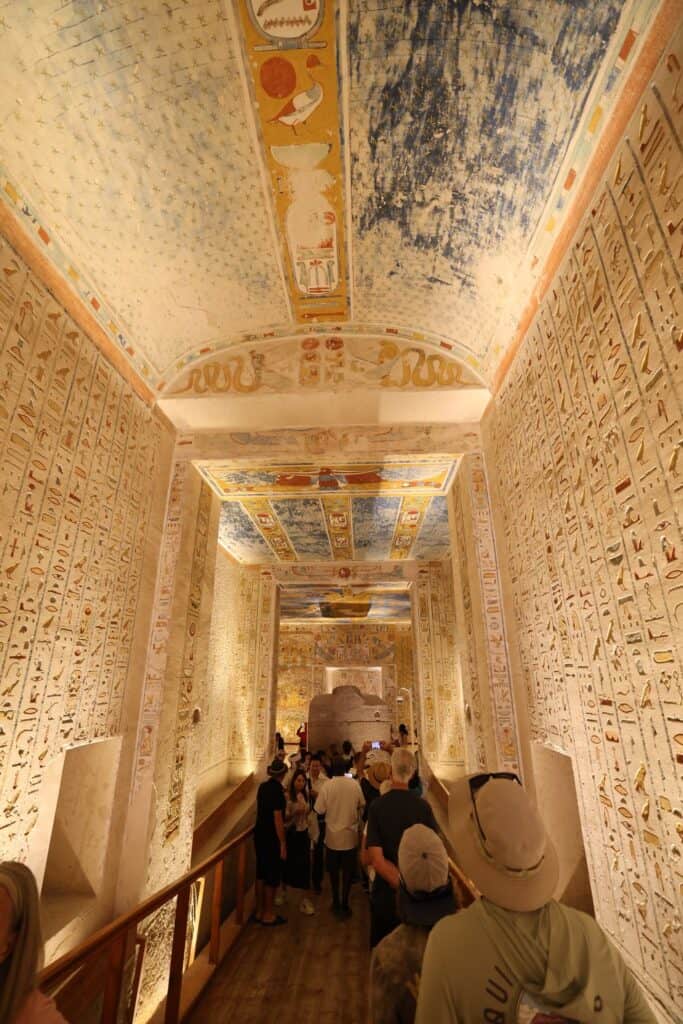
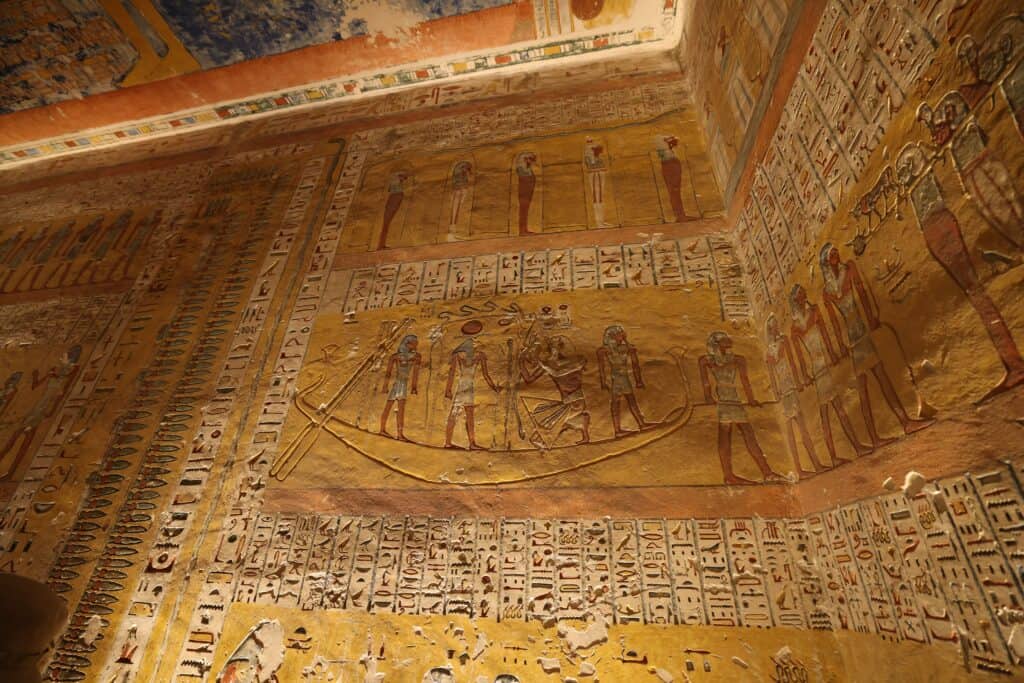
This site is home to more than 60 ancient tombs built for Egyptian pharaohs and nobles during the New Kingdom. Visitors can see beautifully preserved paintings, hieroglyphs, and scenes depicting Egyptian mythology and the afterlife. The pharaohs built these hidden underground vaults here instead of pyramids to deter grave robbers. The valley is also famously known as the site where Howard Carter discovered King Tutankhamun’s intact tomb in 1922. Today, visitors can even see King Tut’s mummified body on display. Walking through this dramatic, dry limestone canyon was quite an experience!
Watch: Valley of the Kings YouTube Short
Temple of Hatshepsut
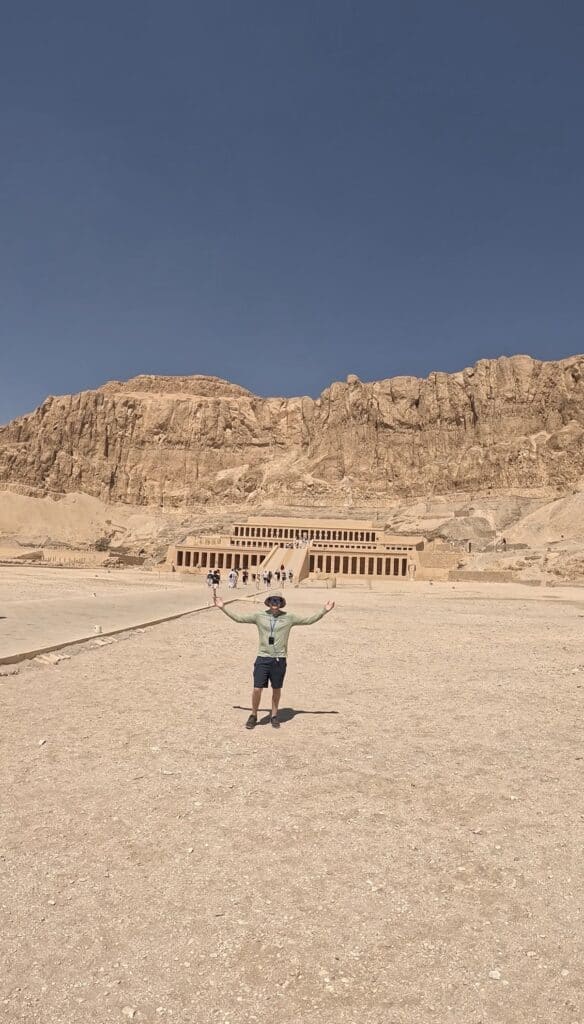
This temple was constructed for Hatshepsut, one of ancient Egypt’s few successful female pharaohs. The complex also honored other pharaohs and Egyptian gods, including Amun-Ra and Hathor. Mentuhotep II began the complex in the 11th Dynasty, and Hatshepsut later expanded it during the 18th Dynasty. The grand staircase leads to an impressive complex of columns, tombs and statues, set dramatically against a towering limestone cliff.
Watch: Temple of Hatshepsut YouTube Short
Imhotep Alabaster Store
This Luxor-based store was a wonderful stop for souvenirs before heading back to Fayrouza. It felt more like a museum, with beautiful handmade replicas of ancient Egyptian masterpieces in alabaster, granite, limestone, wood, and other materials. The artists even demonstrated how the pieces are made from scratch. We never felt pressured to buy anything and simply enjoyed admiring the incredible craftsmanship.
After our final lunch onboard Fayrouza, it was time to gather our things and head to Hurghada for the Red Sea diving portion of our trip aboard All Star Ghani. Our group took the same shuttle bus from Luxor to Hurghada. It was about a four-hour drive, but we stopped halfway for a bathroom break and a chance to stretch our legs.
All Star Ghani
Watch: All Star Ghani Official Video
The Red Sea portion of our trip included four nights aboard All Star Ghani. Upon boarding the vessel, the crew’s commitment to providing fantastic service was evident. We were greeted with a refreshing welcome drink as the crew handled our luggage and showed us to our cabins. We were then given a helpful briefing outlining important aspects of the vessel. The crew also verified our dive certifications, guided us through the required medical and liability paperwork, and assigned each guest a designated dive station. They were readily available to assist with gear setup and any rental equipment needs, making the start of our trip feel organized and effortless.
Safety was clearly a top priority for the crew, who conducted a thorough onboard safety briefing at the beginning of the trip. Each guest was asked to locate their personal life preserver in their cabin and bring it to the briefing to participate in an emergency simulation demonstration. The briefing covered the location of emergency exits throughout the vessel, as well as smoke alarms and fire extinguishers. The crew also emphasized the importance of never leaving electronic devices charging unattended in the cabins, reinforcing their focus on maintaining a safe environment for everyone onboard.
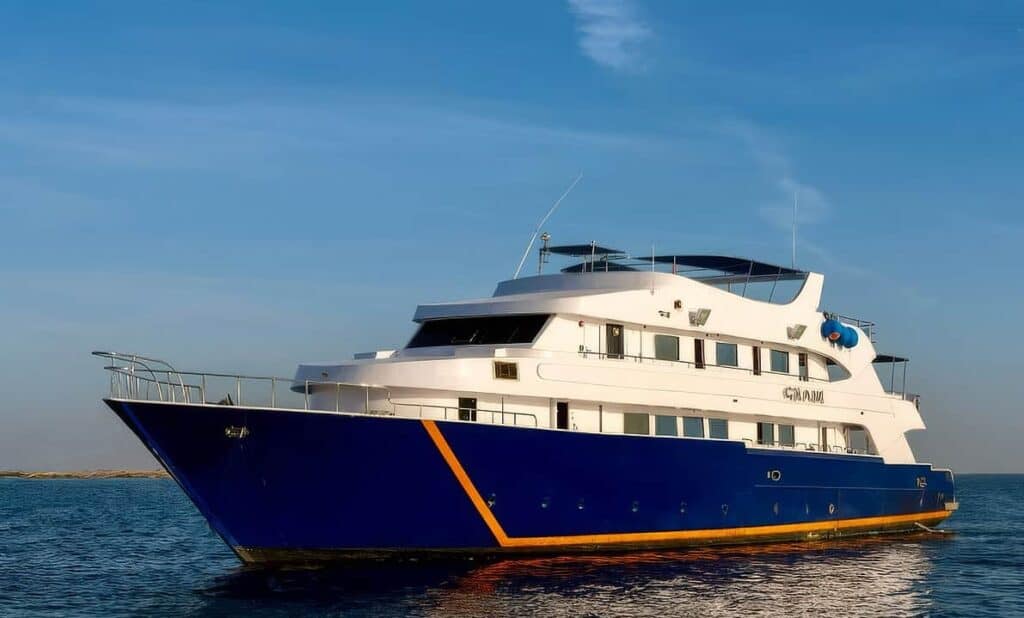
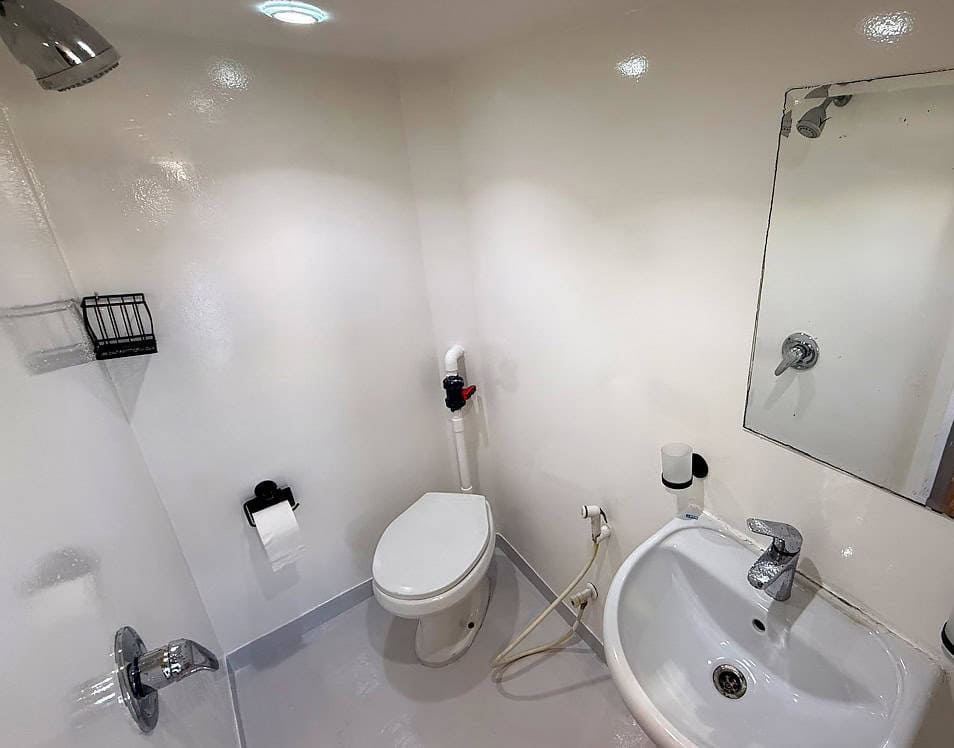
Completely renovated in 2025, All Star Ghani offers a more intimate and relaxed atmosphere compared with its luxurious sister vessel, All Star Scuba Scene. The main deck features a spacious dive platform equipped with everything divers need, including individual gear lockers, two private bathrooms with hot-water showers, an outdoor shower, freshwater hoses and rinse tanks, and conveniently located air and nitrox fill stations. Underwater photographers will appreciate the dedicated camera table, complete with low-pressure air hoses.
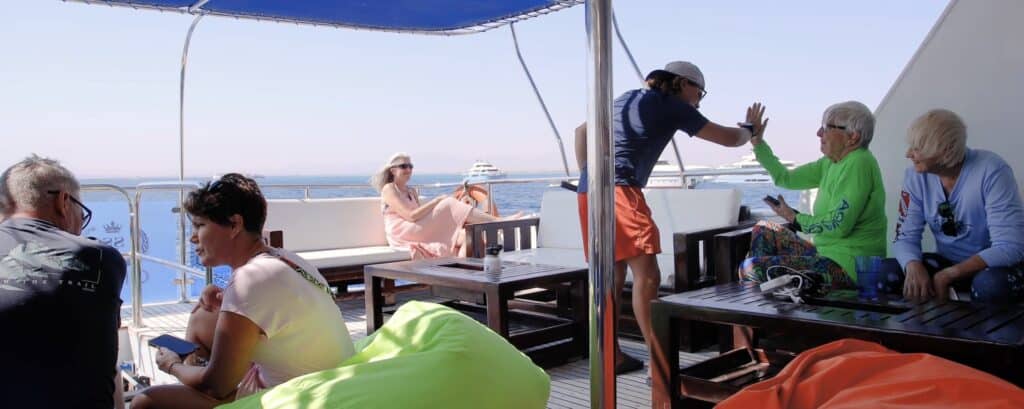
Beyond the dive platform, the main deck includes the vessel’s restaurant and an air-conditioned lounge with a large sectional sofa and television. Upstairs, guests can enjoy a bar and an open-air aft lounge. Beginning the morning with a freshly brewed cup of coffee on the aft deck was a particularly enjoyable way to get ready for the day’s dives. The upper deck offers plenty of comfortable seating and bean bags, making it an inviting place to relax between dives.
The top-level sundeck provides both shaded and unshaded lounge chairs. We especially enjoyed spending time there watching seabirds follow the vessel and taking in the beautiful sunsets each evening.
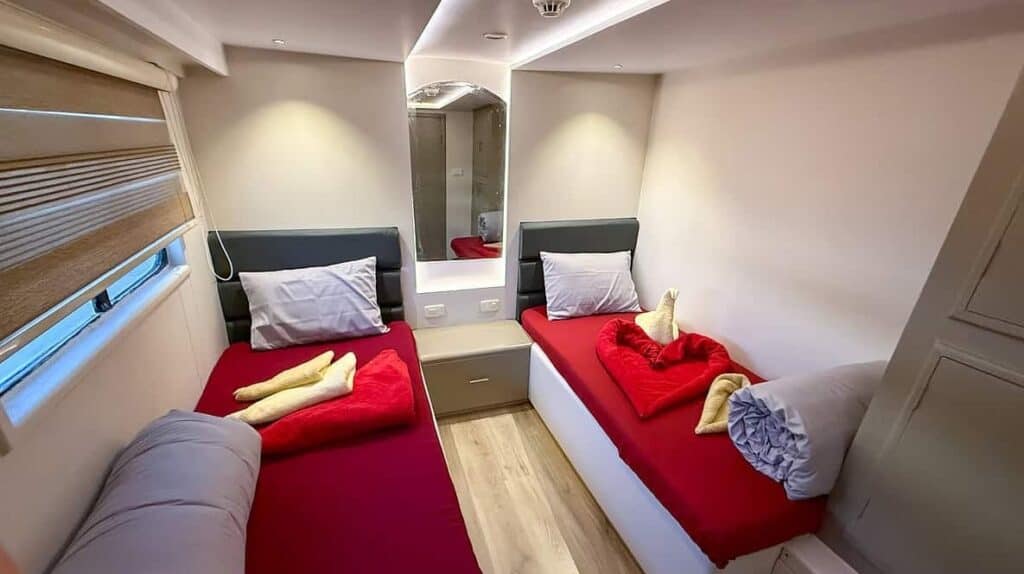
The cabins onboard are cozy and thoughtfully appointed, with private en-suite bathrooms, individual climate controls, and convenient power outlets for charging personal devices. Our upper-deck cabin featured two comfortable twin beds and a large ocean-view window. One of our favorite parts of the stay was waking up each morning to the picturesque sunrise over the water.
Dining aboard All Star Ghani is served buffet-style, with a diverse selection of dishes to suit a variety of tastes and appetites. Alongside an array of international cuisine, guests can enjoy freshly prepared Mediterranean and Middle Eastern specialties each day. The daily meal schedule includes breakfast, lunch, and dinner, with snacks served between dives to help keep guests energized throughout the day. Purified water dispensers are conveniently located on the dive deck, in the main lounge, and on the upper deck, making it easy to stay refreshed and hydrated throughout your journey. The upper-deck bar offers a variety of beverages, including an espresso machine, soft drinks, and flavored electrolyte drinks.
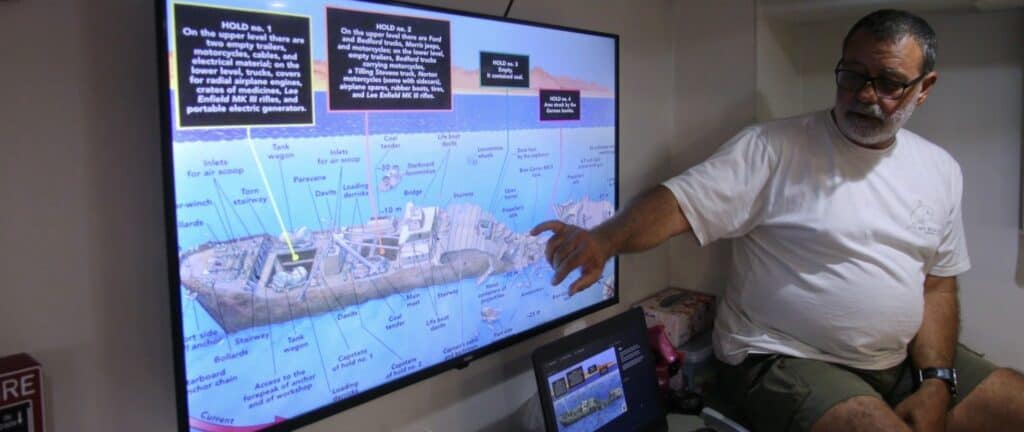
Before every dive on the trip, Ahmed, the vessel’s Cruise Director, conducted an informative dive briefing. Guests particularly appreciated the detailed dive-site maps displayed on the lounge TV, which provided a helpful visual overview of each location. Ahmed consistently outlined a clear dive plan and route, including the site’s topography, expected conditions, and depth limits.
Buddy teams were assigned during the roll call prior to each dive. Divers could either follow a Divemaster throughout the dive or navigate independently with their assigned buddy team. The use of a surface marker buoy (SMB) is mandatory aboard Ghani. This ensures that, should divers become separated from the vessel at the end of a dive, the crew operating the tender boat can easily locate them and arrange a safe pickup.
The lead Divemaster’s, Seify and Batista, did an outstanding job guiding our group. They were attentive throughout each dive, maintained a comfortable pace, and took the time to point out all the extraordinary marine life and beautiful coral formations along the way. After each dive, the Divemaster’s were happy to help guests identify the various fish species encountered at each dive site.
Watch: All Star Ghani YouTube Short
Dive Sites
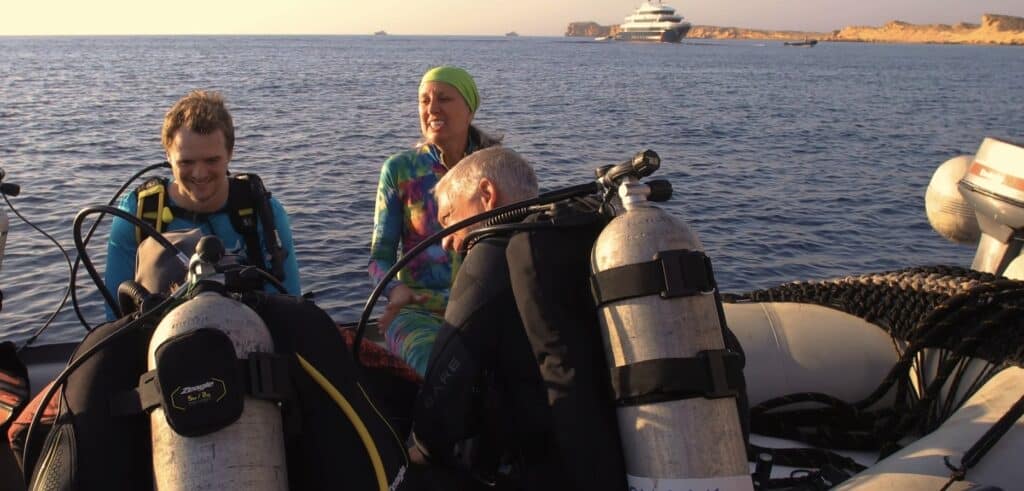
This trip’s itinerary took our group to the northern Red Sea, a region known for its colorful reefs and incredible variety of underwater landscapes. Divers can explore dramatic vertical walls, pinnacle reefs, sheltered atolls, drift dives, and world-famous wrecks such as the SS Thistlegorm and Dunraven. For scuba divers visiting Egypt for the first time, the northern Red Sea is often recommended, as the southern itineraries are generally known for more challenging conditions and offer less variety in dive sites.
Shaab El Erg
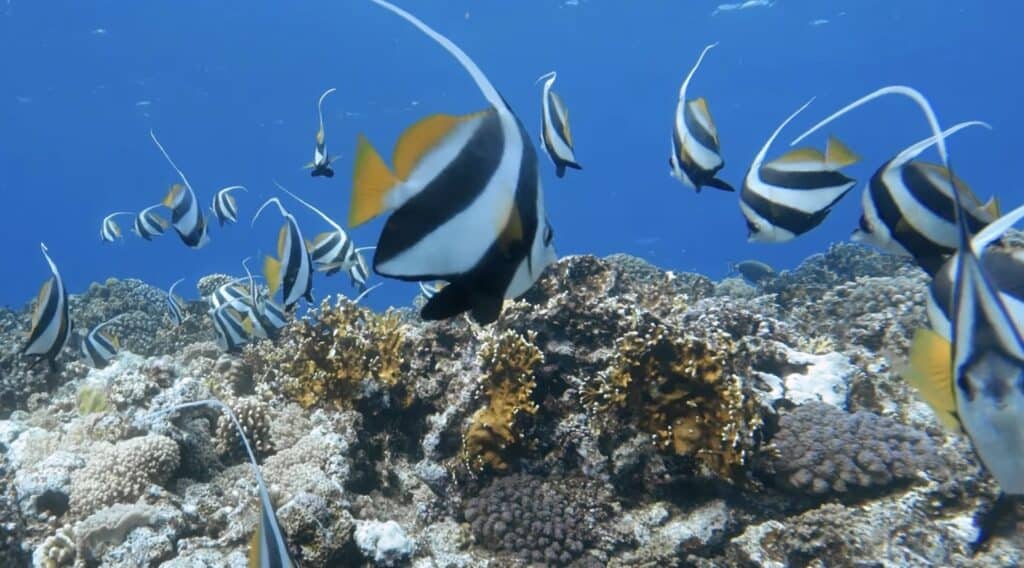
Shaab El Erg is part of a large horseshoe-shaped reef, offering varied topography and abundant marine life. Its sheltered, shallow waters made it an ideal checkout dive, where everyone practiced deploying their surface marker buoy. We also enjoyed schools of bannerfish, masked butterflyfish, Picasso triggerfish, and sergeant majors among colorful Porites and Acropora corals.
Dunraven
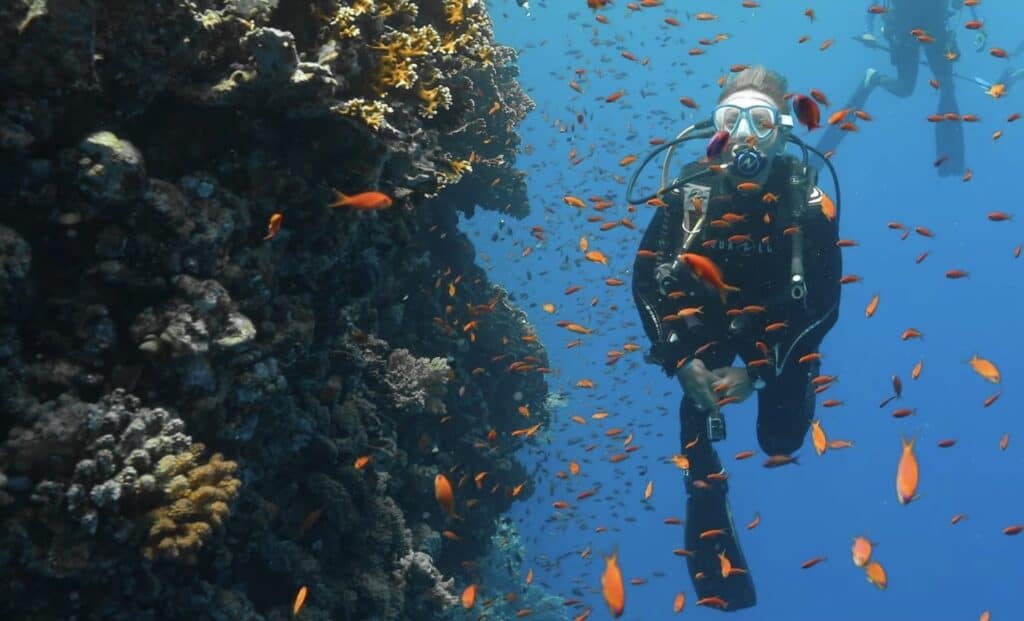
The wreck of the British steamer Dunraven lies near an area known as Beacon Rock. Built in Newcastle in 1873, the Dunraven struck the reef in 1876 and sank alongside the reef wall. The roughly 262 feet long and 32 feet wide wreck lies completely inverted and is split into two sections. The stern rests at around 95 feet on the sandy bottom, with several openings that can be entered by appropriately qualified divers. As we reached the stern, we encountered a giant trevally swimming about. We continued through the wreck alongside the ship’s boiler before exiting at the point where the vessel had split in two. Thousands of glassfish surrounding the exit made for an incredible sight. The bow section sits in shallower water and offers numerous openings where divers can look inside, and appears to merge right into the nearby coral wall. From there, we followed the coral-covered wreck to the reef wall and shallower areas, where we spotted countless giant morays, regal angelfish, masked puffers, and blue triggerfish amidst the vivid cauliflower coral.
Beacon Rock
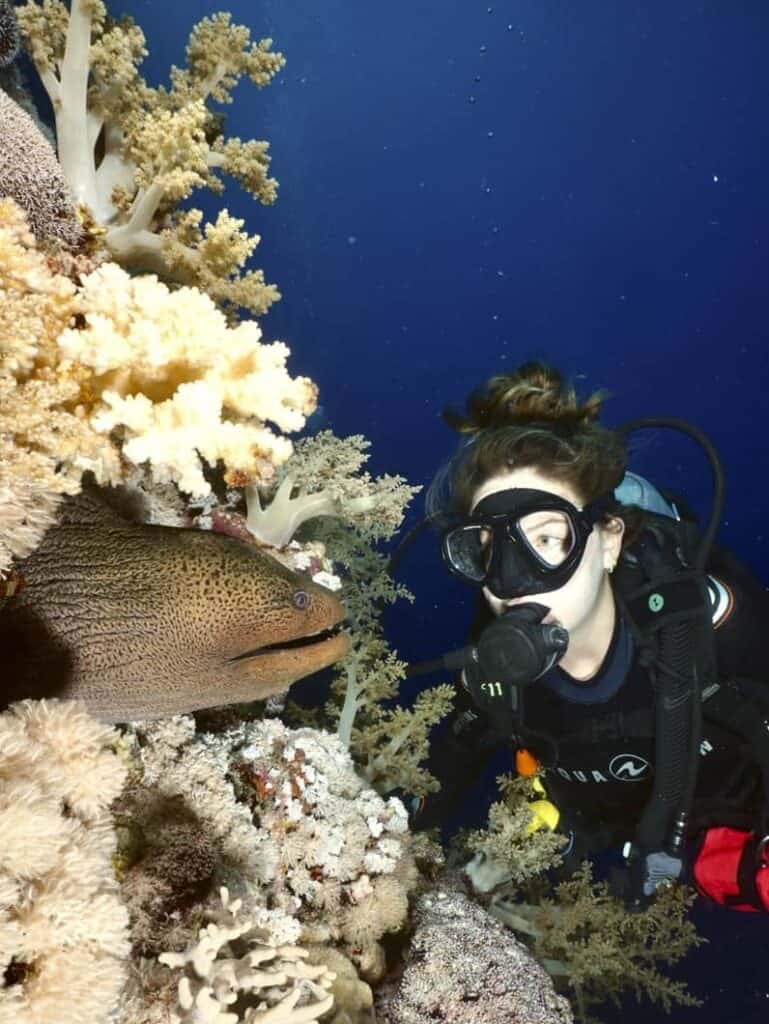
Beacon Rock is located near the southern edge of Sha’ab Mahmoud, just below the South Cardinal Beacon—hence the name of this dive site. The reef slopes from about 15 to 95 feet and is filled with colorful corals and marine life. Here we discovered schools of yellow-saddle goatfish, giant morays, sharpnose puffers, and freckled hawkfish around the giant clams and large sea fans.
Watch: Egytpian Eels YouTube Short
Jackfish Alley
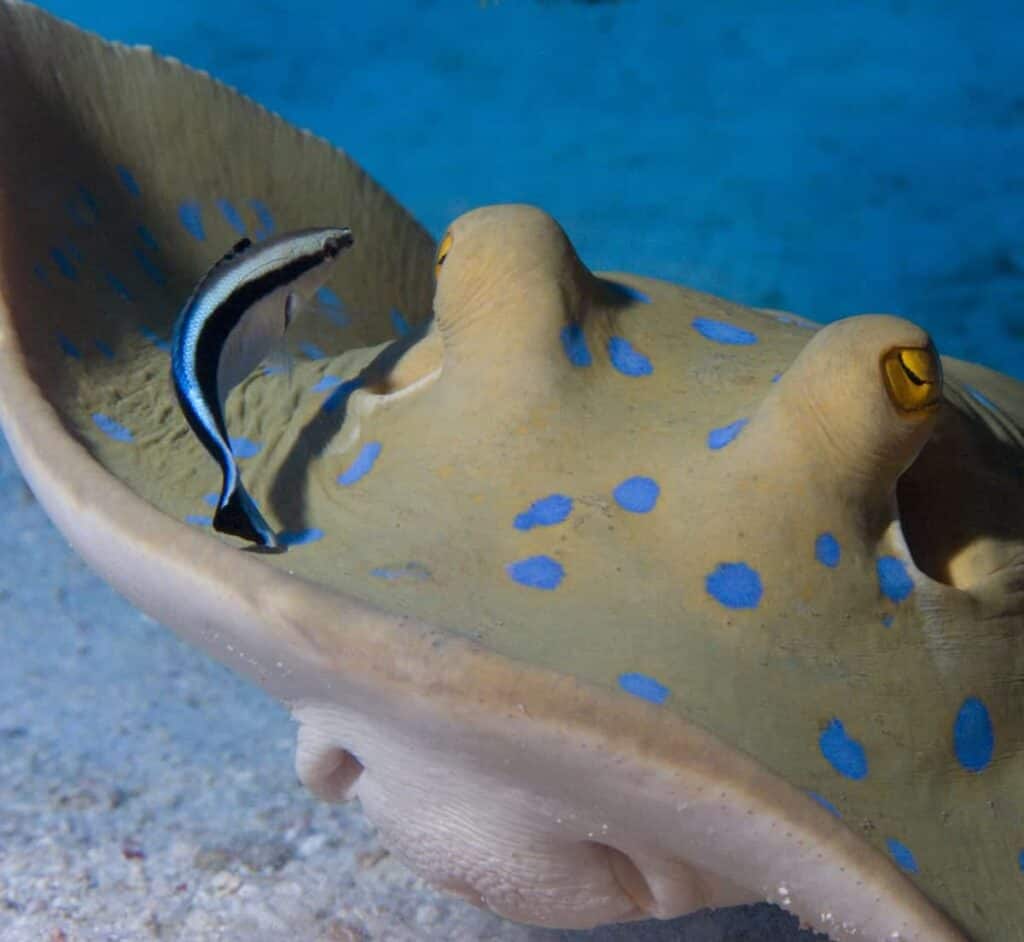
Jackfish Alley is a gentle drift dive offering a diverse and scenic underwater landscape. The dive began with a short swim-through in the reef wall, where cracks in the cave ceiling allowed shafts of sunlight to filter through, creating a dramatic effect. Emerging from the swim-through, the impressive vertical wall dropped away into the deep, with excellent visibility and colorful clouds of anthias surrounding the soft corals. Further along, the sheer wall transitions into a large plateau, separated from the main reef by a sandy-bottomed channel that gives the site its name. Continuing across the plateau beyond the swim-through, we encountered numerous anemones inhabited by clownfish, along with blue-spotted stingrays, napoleon wrasse, purple tangs, halfmoon angelfish, raccoon butterflyfish, and coral grouper. The dive concluded along a gently sloping reef decorated with pinnacles and abundant table corals.
Watch: Red Sea Reefscapes YouTube Short
Shark & Yolanda Reef
Shark Reef and Yolanda Reef are widely regarded among the world’s premier dive sites and are perhaps the most iconic sites within Ras Mohamed National Park. The two towering reefs rise dramatically from depths of more than 2,600 feet to the surface, creating an otherworldly underwater landscape. We completed the dive as a drift dive, beginning at Shark Reef and drifting toward Yolanda Reef. A quick entry is important at this site, as a delayed descent can result in divers drifting on the surface and missing the spectacular vertical wall. The current carried us around the Shark Reef saddle, which connects the two enormous pinnacles, before continuing toward the front of Yolanda Reef. Across the Shark Reef plateau, we passed an unusual collection of coral-encrusted porcelain toilets, bathtubs, pipes, and even a BMW, all scattered across the seabed. As we reached Yolanda Reef, the sheer scale and exceptional visibility of the drop-off were breathtaking, with the reef walls seemingly vanishing into the deep blue. The abundance of biodiversity truly made the site feel like an overstocked aquarium. Conditions here can be exhilarating, with currents shifting direction throughout the dive and creating an exciting, fast-moving experience. The marine life was exceptionally abundant, with highlights including a massive great barracuda, titan triggerfish, cornetfish, black-spotted sweetlips, emperor angelfish, threadfin butterfly fish, peacock grouper, batfish, snappers, unicornfish, and sea turtles. The sheer walls and overhangs were adorned with vibrant pink, purple, and orange soft corals, alongside impressive gorgonian fans, brain corals, and fire corals.
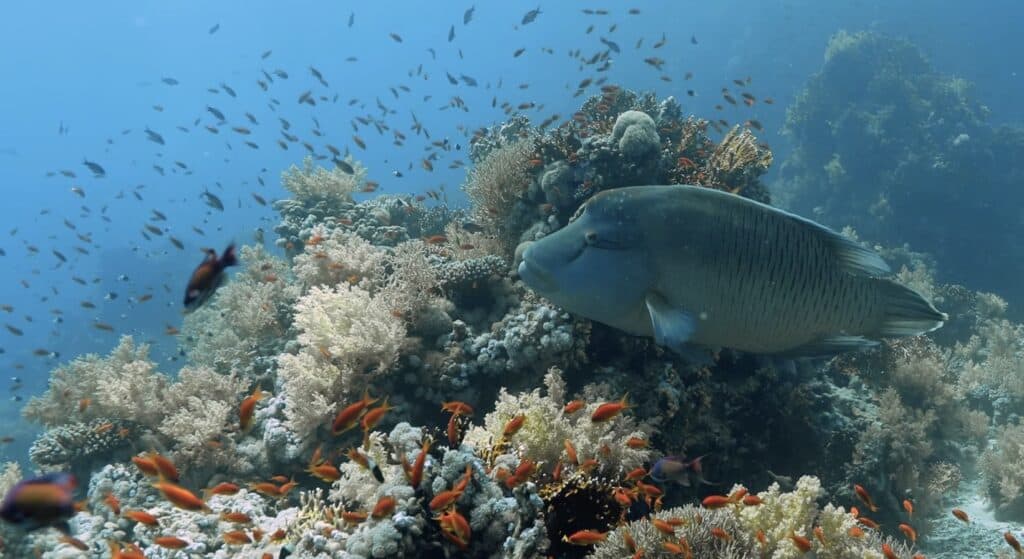
The S.S. Thistlegorm
The S.S. Thistlegorm is one of the world’s most famous wreck dives, and our group was fortunate enough to make two dives here. The first focused on the exterior, while the second took us inside the fascinating wreck. Built in 1940, the 413-foot SS Thistlegorm was a freighter carrying military supplies during World War II. It sank on October 6, 1941, after German aircraft bombed the vessel. Today, divers are drawn to the wreck for its remarkably preserved cargo. Inside the holds, we saw boots and motorcycles in hold number one, while hold number two contained trucks, armored vehicles, motorcycles, Wellington boots, rifles, aircraft parts, and engine components. One of the steam locomotives lies on the port side near the blast area, while the other rests on the starboard side near hold number two. The wreck was just as impressive for its marine life, with giant scorpionfish, clownfish, yellow-edged moray eels, lionfish, and huge schools of snappers, soldierfish, and jacks surrounding the decks.
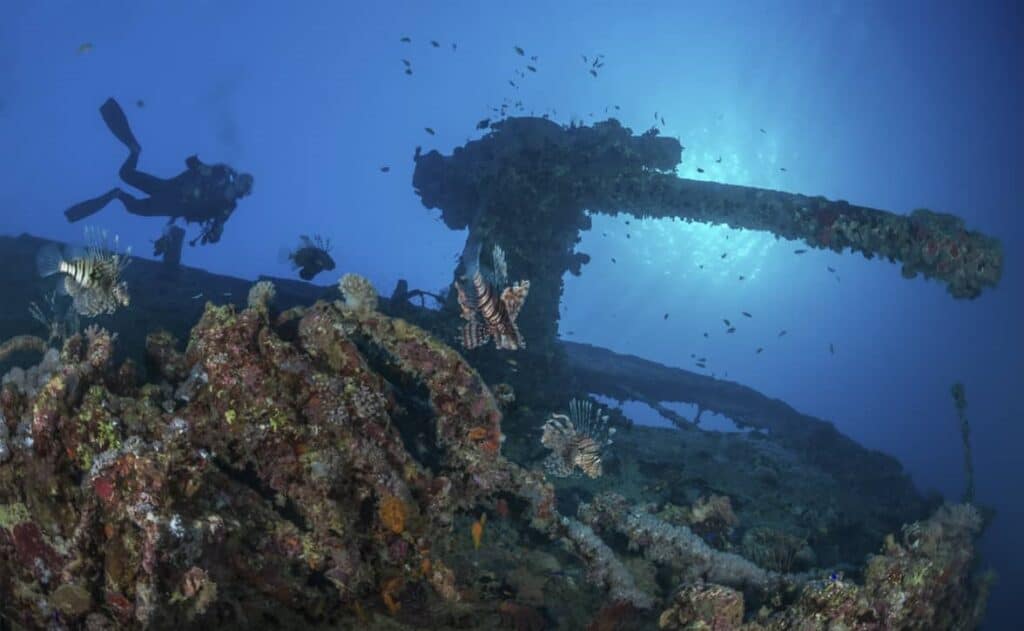
Umm Gamar
The Umm Gamar dive began on the shallow southern plateau before heading towards the eastern wall. We explored coral towers, blocks, and three pinnacles filled with glassfish, then continued along the vibrant soft-coral-covered wall, with its cracks, overhangs, and caverns. This site was also home to clownfish, crocodilefish, sailfin tangs, and countless jewel fairy basslets and anthias weaving around the branching corals.
Watch: Ras Mohamed Nature Reserve YouTube Short
Siyoul Kebira
Siyoul Kebira is a beautiful island with sheer walls, vibrant coral gardens, and shallow lagoons. While the views above water were stunning, the real highlight was underwater. Along the wall at this site, several pinnacles resemble house-like structures, adding to the area’s unique topography. Among the colorful Pocillopora corals, we spotted cometfish, butterflyfish, Sohal surgeonfish, giant morays, blue chromis, parrotfish, and an array of damselfish.
Watch: Clownin’ Around YouTube Short
This evening brought us back to port for our final night onboard Ghani. The port is conveniently located at the Hurghada Marriott resort, which offers a lovely beach, a large swimming pool, and several bars and restaurants. We enjoyed getting our sea legs back on land at the Marriott, relaxing in the lounge bar, and playing a few games of pool. The next day, we took our domestic flight from Hurghada to Cairo, which was included in the trip cost through All Star Liveaboards.
Cairo Tour Highlights
After arriving in Cairo, our shuttle bus took us to Giza, where we settled in for a restful night at the Steigenberger Pyramids Hotel. Waking up to a view of the iconic Pyramids of Giza from our hotel room patio was truly special. The hotel offers comfortable guest rooms, complimentary Wi-Fi, restaurants and bars, a spa, and a swimming pool. Following a wonderful complimentary breakfast at the hotel buffet, we gathered our things and boarded the shuttle for our final day of touring with Amira.
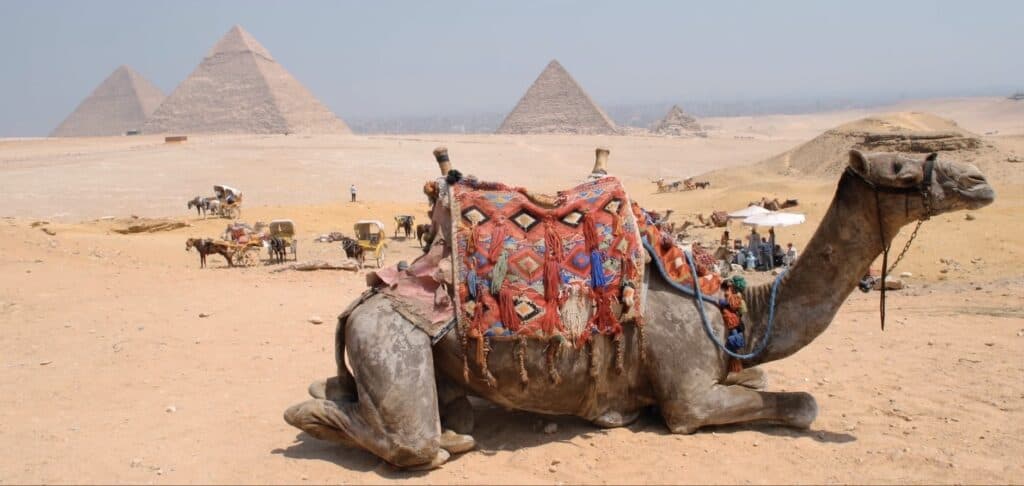
The Pyramids of Giza
The Pyramids of Giza and the Great Sphinx of Giza are ancient monuments built during Egypt’s Fourth Dynasty, around 2600–2500 BC. The entrance and welcome center featured a variety of interesting maps, artifacts, and a 3D model of the site. From there, we were shuttled to the front of the Great Pyramid of Khufu. The Great Pyramid is the oldest and largest of the three pyramids and was built as a tomb for Pharaoh Khufu. It originally stood approximately 481 feet tall and was constructed using more than two million massive stone blocks. Visitors had the option to enter the pyramid and make their way up to the King’s Chamber. The journey involved climbing through a steep, narrow passage that led upward into the impressive Grand Gallery, which features a soaring corbelled limestone ceiling. At the top, the King’s Chamber is the highest main room in the pyramid. It is lined with enormous red granite blocks and contains Khufu’s empty stone sarcophagus. We were grateful to have experienced this once-in-a-lifetime opportunity. However, the journey inside the pyramid was extremely hot and somewhat claustrophobic, making the climb quite challenging. Guests who chose not to venture inside the Great Pyramid instead circled around it, marveling at its incredible size.
Watch: The Pyramids of Giza YouTube Short
Great Sphinx of Giza
The Great Sphinx of Giza is a limestone statue of a resting sphinx, a mythical creature with a human head and the body of a lion. The statue served as a symbolic protector of the royal tombs and pyramids on the Giza Plateau. The lion’s body paired with the head of a human pharaoh represented powerful kingship, strength, and divine wisdom. Because it faces east toward the rising sun, the Sphinx was also connected to the sun god Ra, symbolizing vitality and safe passage into the afterlife.
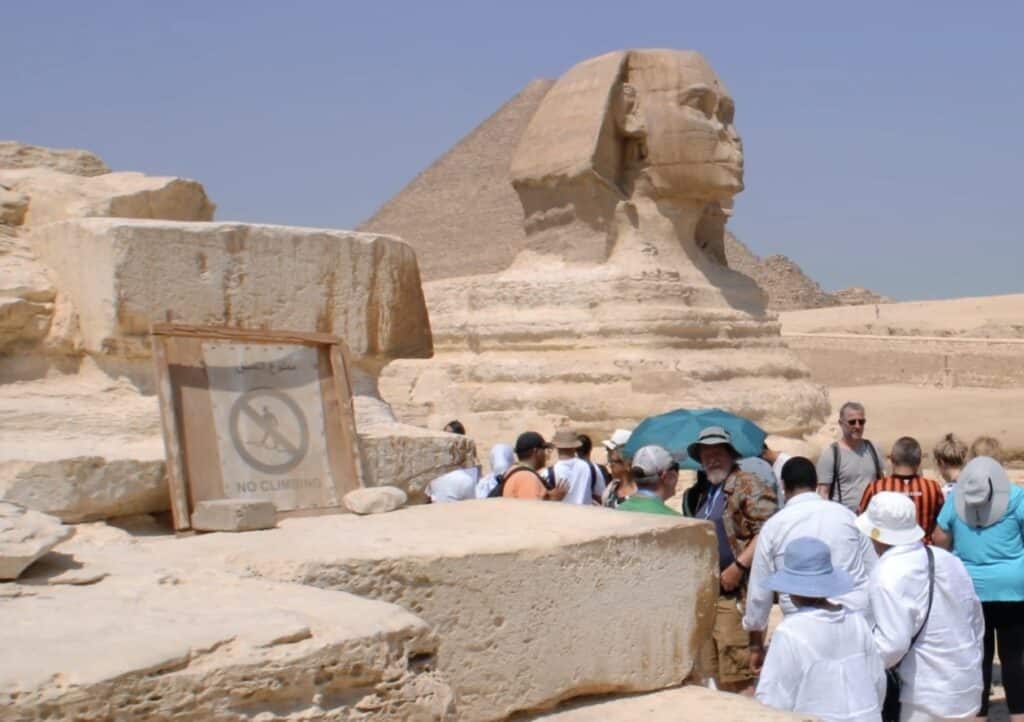
Camel Riding
Riding a camel at the Pyramids of Giza is a classic way to experience the desert landscape and enjoy incredible views of the ancient structures. Each guest was assigned a camel and safely climbed aboard while it was resting low to the ground before it slowly stood up, ready for the adventure ahead. Every friendly camel had a comfortable saddle decorated with beautiful Egyptian-inspired designs. The camel ride took our group to a panoramic viewpoint overlooking the Pyramids of Giza, creating a wonderful opportunity to capture some memorable photos. Our camel-riding tour guide was also thoughtful enough to take individual photos of everyone, as well as a group photo so we could all remember the experience.
The Necropolis of Sakkara
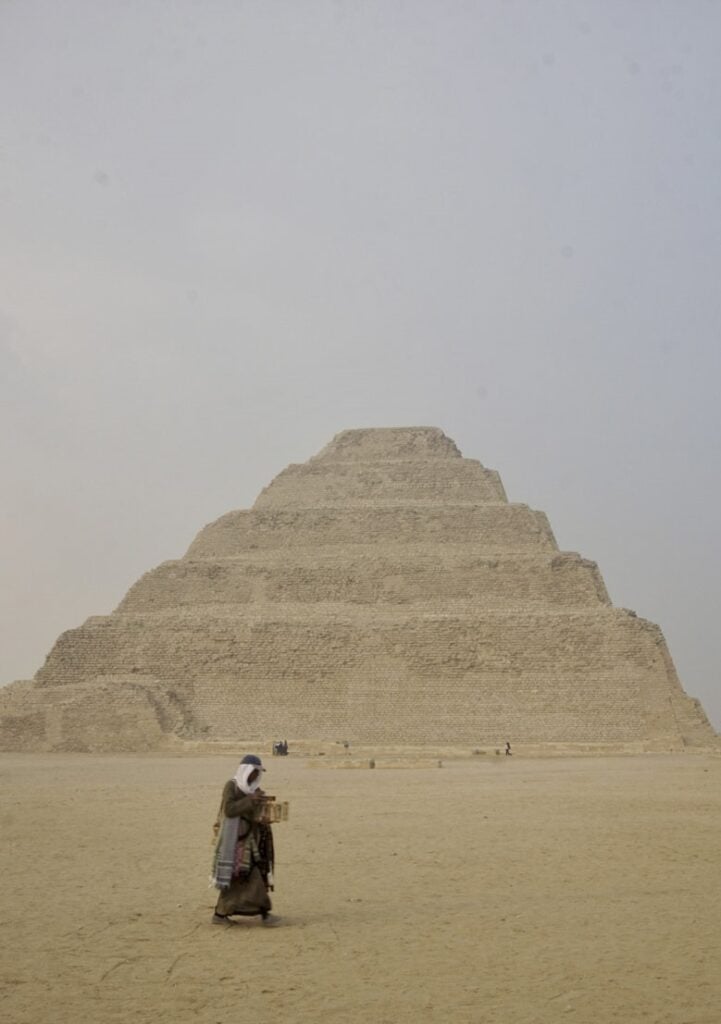
The Necropolis of Sakkara is a vast ancient Egyptian burial ground that served Memphis for more than 3,000 years. It’s home to the oldest complete stone building complex and the first major pyramid in history. This site is also known for the Pyramid Texts, the oldest known ancient Egyptian funerary writings, carved into its walls. The highlight was having Amira guide us through the underground tunnels and massive stone boxes that once held the mummified Apis bulls. Unlike the Great Pyramid of Giza, the tunnels were wonderfully cool!
After our visit to the Sakkara Pyramid, our group headed to a nearby open-air restaurant for an authentic Egyptian-style meal. We were warmly welcomed by a lively band whose music quickly had guests dancing and enjoying the festive atmosphere. The meal featured an array of delicious dishes, including chicken and beef kebabs, eggplant, fresh salad, warm baladi bread, rice, and grilled vegetables. Towering palm trees surrounded the restaurant, creating a beautiful and relaxing lunch setting.
The Grand Egyptian Museum
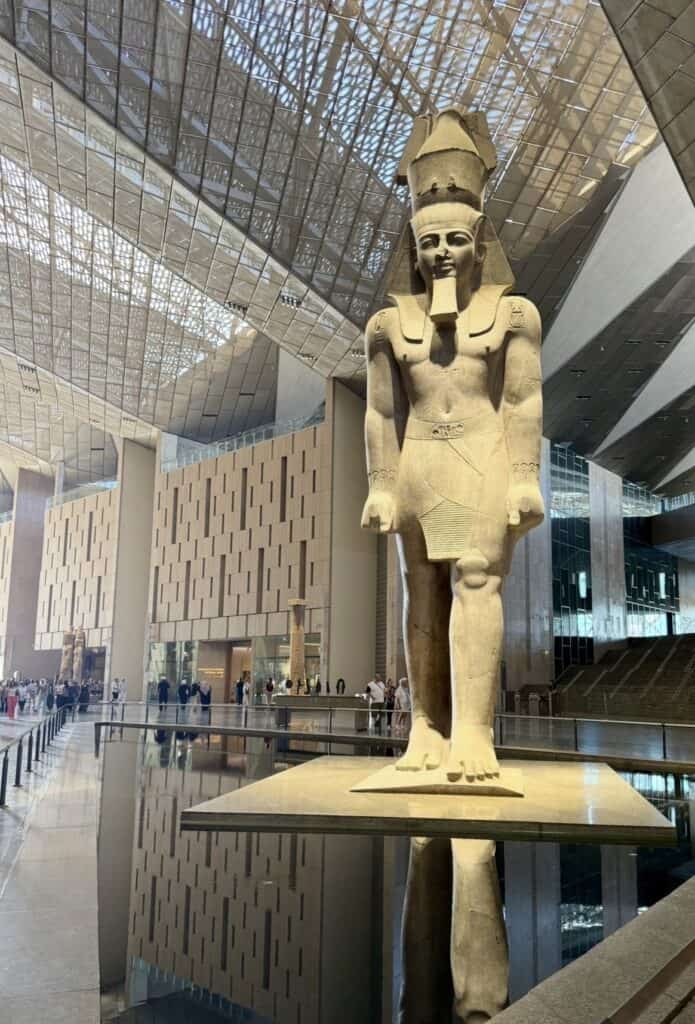
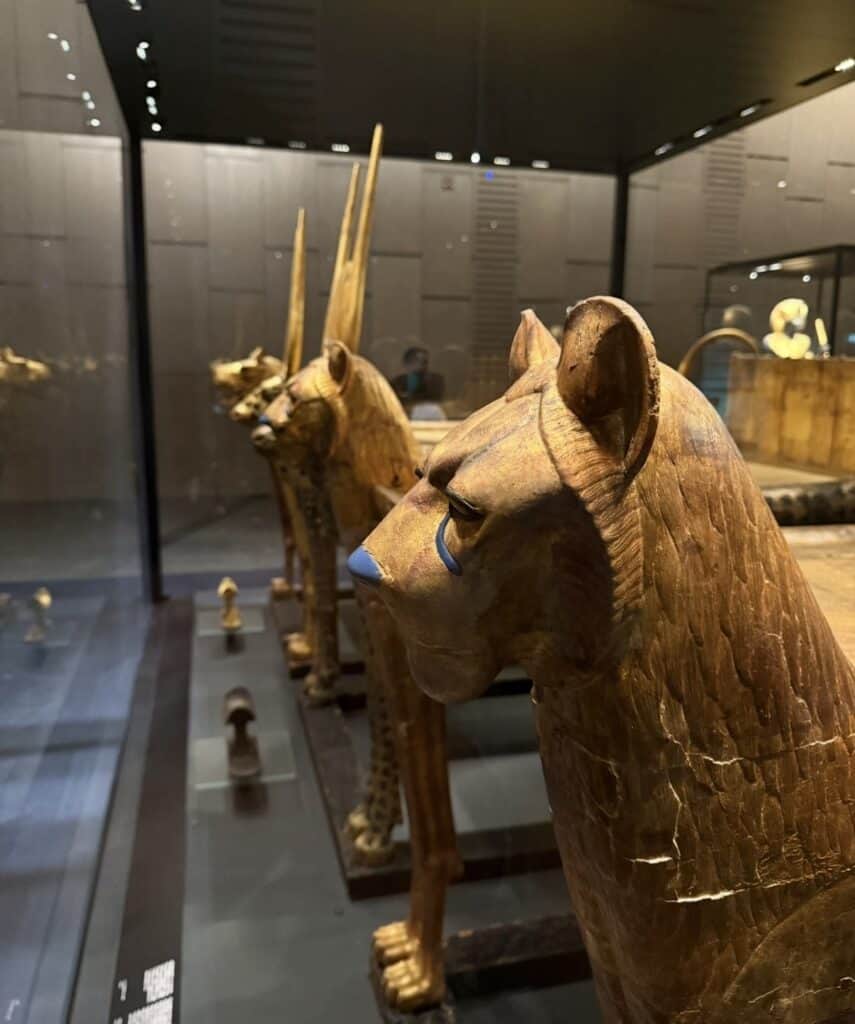
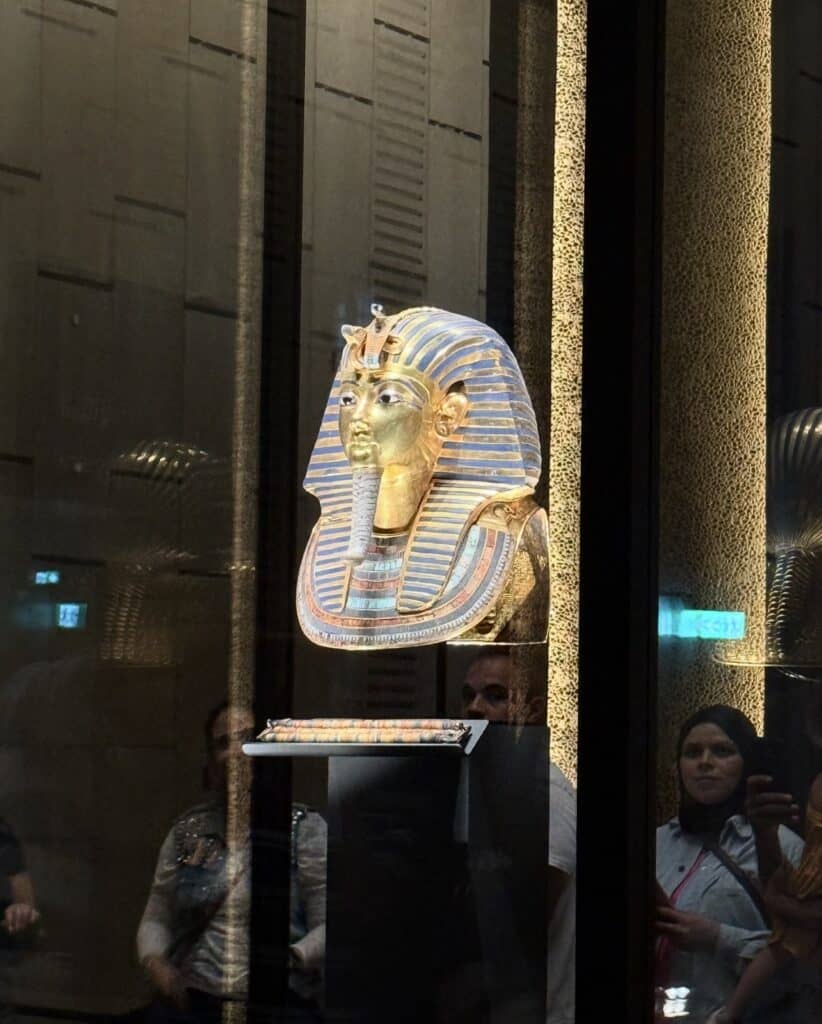
The Grand Egyptian Museum is the largest museum in the world dedicated to a single civilization. Visitors first enter beneath a suspended pharaonic obelisk in the enormous outdoor courtyard. The front entrance and desert-facing elevations feature impressive locally sourced, translucent alabaster stone panels. As you enter, you are immediately greeted by the towering 36-foot-tall statue of Ramses II. The Grand Staircase is a spectacular six-floor ascent lined with 59 colossal royal statues and major pharaonic artifacts, offering panoramic views of the Giza Pyramids. The museum also showcases the incredible King Tutankhamun Collection, with 5,400 items from his tomb—including his golden mask and jewelry—all displayed together in one place. Another highlight was the 4,500-year-old cedarwood vessel built for Pharaoh Khufu’s afterlife journey, carefully reassembled and displayed in a specialized two-story museum space. Our group especially enjoyed experiencing this ancient history through high-tech displays, multimedia, and 3D projections that brought the past to life.
Papyrus Shop
This Papyrus shop offers a hands-on demonstration of how papyrus is made, along with artwork created on papyrus. They also have handmade Egyptian cartouches inspired by pharaohs’ names in hieroglyphs. The staff was friendly and happy to write each visitor’s name in hieroglyphs, with no pressure to buy anything.
Andrea El Mariouteya
As our final dinner together, we enjoyed a wonderful meal at the upscale Andrea El Mariouteya Restaurant in New Giza. The hilltop setting offered beautiful panoramic views of the city below and a refreshing breeze. The juicy, well-seasoned rotisserie chicken was served with fresh baladi bread, hummus, feteer meshaltet, and sautéed vegetables. It was a delicious way to wrap up a fantastic day of touring Cairo before heading back to the USA.
Final Thoughts
I can’t say enough great things about All Star Liveaboards for creating such an incredible first trip to Egypt! In just nine days, we cruised the Nile, explored amazing temples and monuments, dove the northern Red Sea, and experienced the best of Cairo. They handled everything—from transportation and delicious meals to hotels and domestic flights—making the entire trip effortless.
The crew was truly exceptional. Higazi made everyone on Fayrouza feel at home, Amira was an amazing and knowledgeable guide, and Nermine’s behind-the-scenes work kept everything running smoothly. Ahmed’s attention to detail and safety aboard Ghani was outstanding, while Seify and Batista were some of the friendliest and most knowledgeable divemaster’s I’ve ever had the pleasure of diving with.
One of the best parts of a liveaboard trip is the camaraderie. By the end, our group felt like one big family, and we made friendships I’ll always cherish.
If you’re considering this trip, pack light, dress comfortably for the weather, bring an EU-style outlet adapter, respect the local culture, and trust the incredible crew to take care of the rest. The long journey is absolutely worth it for such a once-in-a-lifetime experience. I’ll never forget this trip and will always be grateful for the memories!
Written by Jay R. Hantge