
Why dive the Banda Sea?
The Banda Sea, Indonesia is one of the most remote and rewarding dive destinations on Earth. Known as part of the legendary Spice Islands (Maluku), this region blends dramatic volcanic landscapes, rich colonial history, and some of the most pristine marine ecosystems left in the Indo-Pacific.
Stretching roughly 600 miles east to west and 300 miles north to south, the Banda Sea sits at the heart of the Coral Triangle—home to the highest marine biodiversity on the planet.
But what truly sets Banda Sea apart?
Schooling hammerheads, whales, sea snakes, lava flow reefs, and untouched coral walls—all in one trip.
Best Time to Dive the Banda Sea
The Banda Sea is highly seasonal, and timing your trip correctly is crucial.
The best months for diving are:
- April – May
- August – October
During these periods, divers benefit from:
- Calm seas and safer crossings
- Excellent underwater visibility (often 20–30+ meters)
- Comfortable weather conditions
These windows also align with the migration of schooling hammerhead sharks, particularly around the southern islands known as the Forgotten Islands.
Outside of these months, conditions can become unpredictable with rough seas, making liveaboard travel more challenging and limiting access to certain dive sites.
Liveaboards: The Only Way to Explore the Banda Sea
Due to its vast size and remote geography, the Banda Sea is best explored via liveaboard diving cruises. Land-based diving is extremely limited and cannot access the region’s most iconic sites. Choosing the right liveaboard can significantly impact your overall Banda Sea experience.
Modern Luxury Liveaboards
For those seeking speed and comfort, newer steel or aluminum liveaboards offer a more modern experience.
Benefits include:
- Increased stability in open seas
- Faster cruising speeds (covering more distance)
- Expanded itineraries with more dive sites
For example, high-performance vessels can cruise at nearly double the speed of traditional boats, allowing divers to spend less time traveling and more time underwater or relaxing on board.

Some of the newer liveaboards have opted for an aluminum or steel monohull design, which can provide both added stability and increased speed. All Star Velocean is a 5-star luxury liveaboard. At 171 ft., it is one of the largest liveaboards in the world, and, with its 2 Cummins 1875HP engines, it is one of the fastest dive liveaboards in the world. The cruising speed (20 knots) will be nearly double that of your standard liveaboard. This will allow the Velocean Liveaboard to offer unique itineraries and maximize guests bottom time and topside relaxation.
Traditional Pinisi Liveaboards
Indonesia’s iconic pinisi-style wooden sailing vessels offer a unique and authentic way to explore the Banda Sea. Originally built for transporting spices and goods between islands, these boats have been beautifully converted into dive liveaboards.
- All Star Aurora: 138-ft Pinisi-style dive
- 9 spacious cabins with private baths
- Checkout the Banda-Triton Bay Itinerary
Advantages include:
- Classic Indonesian sailing experience
- Access to remote islands and hidden dive sites
- A slower, more immersive journey

TOP DIVE REGIONS IN THE BANDA SEA
Banda Islands: Banda Neira, Banda Api & Banda Besar
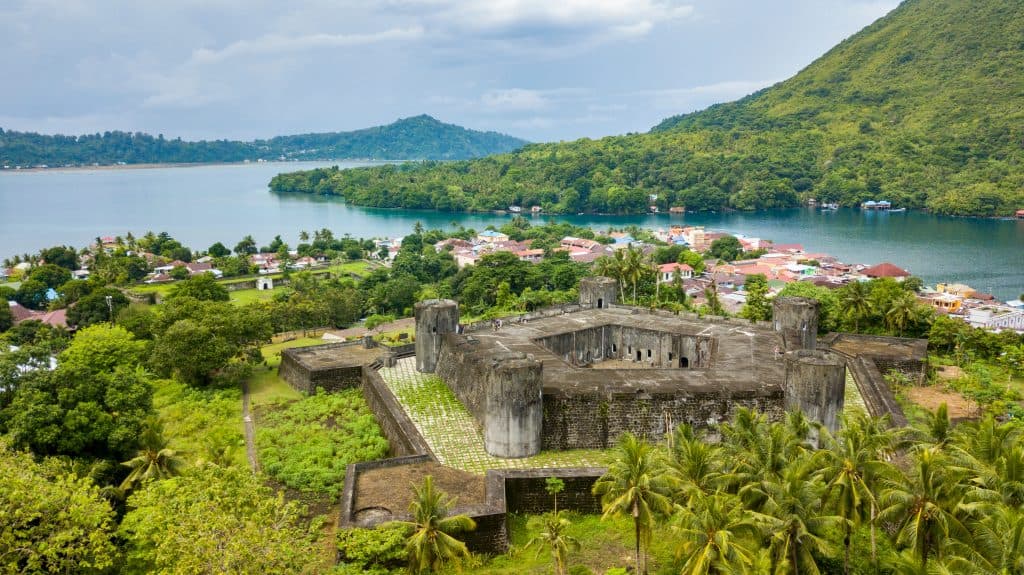
Banda Neira is the capital of the Banda Islands and home to Fort Belgica, one of the few still intact Dutch Forts in this region. Guests can head into town to view Dutch architecture and the influence their occupation had on the Bandanese. Additional excursion opportunities include a visit to a nutmeg farm and the local maritime museum.
In 1988, a volcanic eruption destroyed most of the coral surrounding this site.
Highlight:
Lava Flow – One site, aptly named Lava Flow, sits on a black volcanic backdrop and is blossomed with staghorn, plate and table corals. This site is also one of the best locations in the world to spot the famous Mandarin Fish, which come out to perform their mating ritual at night.
Manuk aka ‘Snake Island’
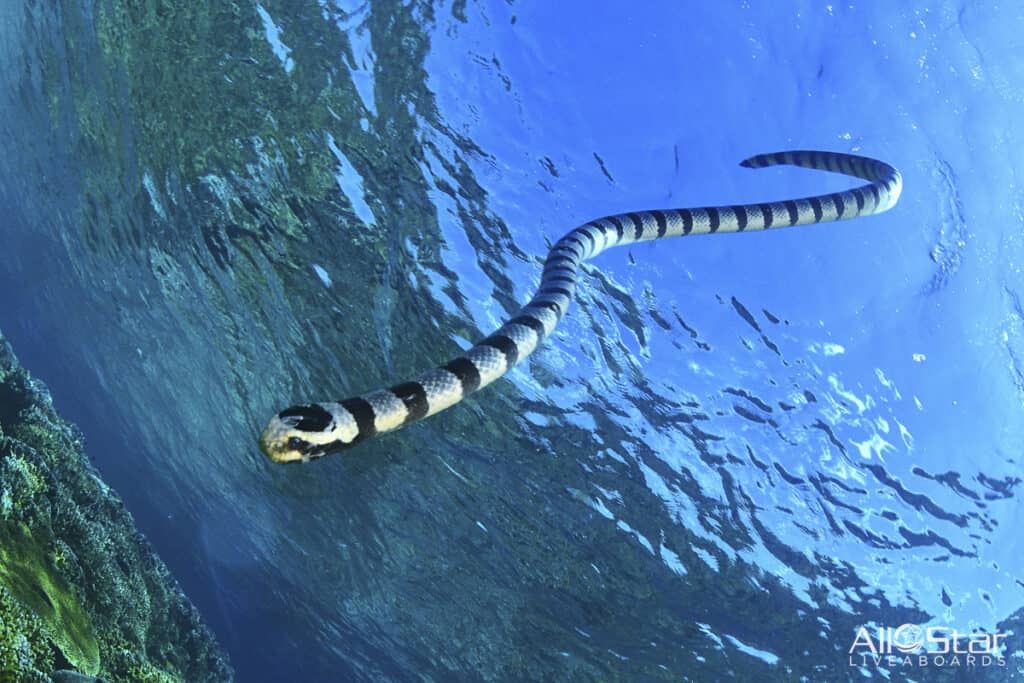
Manuk is a volcanic island that takes its name from the abundance of seabirds. Bird enthusiasts can spot Frigates, White-Bellied Sea Eagles and Red Footed Boobies to name a few. The surrounding waters will delight divers with coral covered walls and geothermal vents. The drop-offs here are amazing and sharks, mackerels, tunas and barracudas are often observed. Manuk is often referred to as ‘Snake Island’ as well as you are sure to see a lot of them! The Banded Sea Snakes or Kraits are said to be attracted to the geothermal vents.
The Forgotten Islands
Nils Desperandum, Serua and Nila
For many divers, this region is the highlight of the Banda Sea.
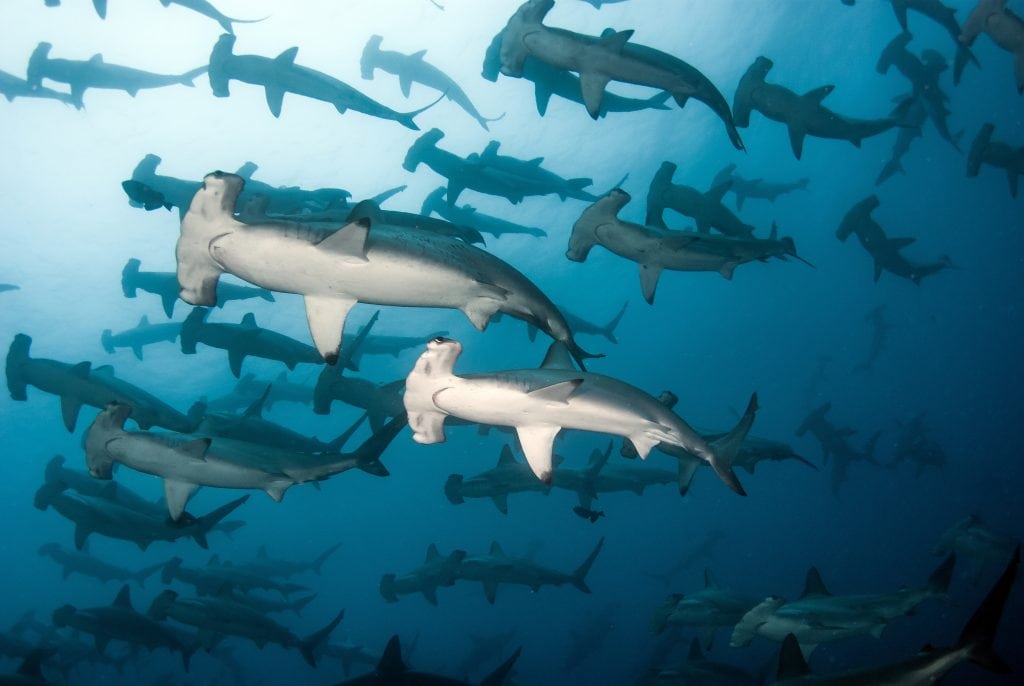
Nils Desperandum, meaning “Don’t Despair”, refers to the name of a ship that was stranded on the reef centuries ago. This atoll along with Mount Serua and Mount Nila make up the region often referred to as the “Forgotten Islands”. The steep drop-offs here are your best chance to spot schooling hammerheads.
Nusa Laut & Molana
Located east of the bigger island of Ambon, these picturesque islands of Maluku are popular dive destinations for the abundance and diversity of macrolife.
Marine Life
- Massive coral gardens
- Sea Turtles
- Giant Clams
- Bumphead parrotfish
- Diver tip: Glance out to blue water every so often as divers are occasionally graced with schooling hammerheads or cetaceans like sperm or pilot whales.
Komba Island: Diving beneath an erupting volcano
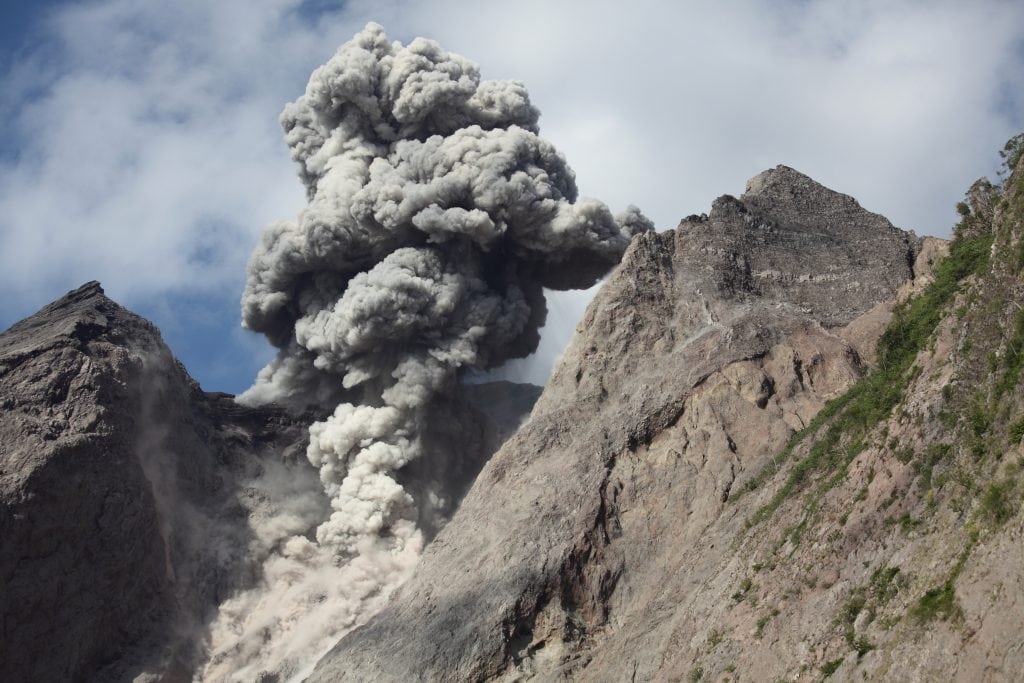
Komba Island is one of the most dramatic and unique dive locations in the Banda Sea, defined by its highly active volcano, Gunung Komba, which erupts roughly every 20–30 minutes. From the deck of a liveaboard, divers can often witness glowing bursts of lava and ash clouds rising into the sky—an unforgettable backdrop to an already extraordinary dive experience.
Below the surface, Komba offers a striking contrast of environments. The underwater terrain ranges from black volcanic sand slopes to rocky ridges and coral-covered outcrops, creating a diverse habitat for marine life. This is an excellent location for macro diving, with frequent sightings of nudibranchs, shrimp, and other small critters that thrive in volcanic conditions.
Explore dive sites like Bubble Reef where divers can see gas bubbles rise from the ocean floor and walls covered in hard and soft corals.
Ambon
Ambon is often the starting or ending point for Banda Sea liveaboards.
Globally recognized for muck diving, Ambon is a paradise for underwater photographers.
Here, divers search sandy bottoms for rare and unusual creatures such as:
Exotic nudibranchs
Rhinopias
Frogfish
Ghost pipefish

Diving Conditions & Experience Level in Banda Sea
The Banda Sea is best suited for intermediate to advanced divers.
Conditions may include:
- Strong and unpredictable currents
- Deep dives
- Open ocean environments
- Limited access to emergency services
Divers should be comfortable with:
- Drift diving
- Negative entries
- Deploying surface marker buoys
For experienced divers, however, these conditions are part of what makes the Banda Sea so exciting.
Marine Life in the Banda Sea
One of the biggest draws of the Banda Sea is its incredible biodiversity.
Divers may encounter:
- Hammerhead sharks
- Reef sharks
- Tuna and barracuda
- Banded sea snakes
- Mandarin fish
- Whale species (pilot whales, sperm whales)
In addition to large pelagics, the region also boasts:
- Healthy coral reefs
- Rare macro species
- Seasonal migrations
This balance between big and small marine life makes the Banda Sea one of the most well-rounded dive destinations in the world.
How to Get to the Banda Sea
Most liveaboard trips begin in Ambon, the capital of Maluku province.
Typical travel route:
- International flight to Jakarta or Bali
- Domestic flight to Ambon
- Transfer to your liveaboard vessel
Some longer itineraries will combine multiple regions and may start or end in a different port. Combo trips can include Alor-Banda, Banda-Raja, or Banda-Triton Bay.
For additional information visit our blog on How to Travel to Indonesia.
Why the Banda Sea should be on your bucketlist!
The Banda Sea is often referred to as:
- The Forgotten Islands
- Spice Islands
- Indonesia’s last frontier
It offers a rare combination of:
- Untouched dive sites
- Rich cultural history
- Unique volcanic landscapes
- World-class marine life
Click here for more info – Indonesian dive liveaboards.